Let's talk about what anxiety actually does
Anxiety doesn't just ruin the headspace for sex. It physically shuts down arousal. When your nervous system is in a heightened state, your body diverts blood away from your genitals and toward your limbs, lungs, and brain. Your pelvic floor tenses. Lubrication slows or stops. Touch that normally feels electric becomes just meh. You're not broken. Your body is doing exactly what it's designed to do: protecting you from perceived threat.
The frustration is real. You want sex. Your partner wants sex. But your nervous system decided there's a tiger in the room, and it's not interested in negotiation.
Why slow arousal and anxiety go hand in hand
Here's the thing about anxiety-driven slow arousal: it's not the same as low libido. Your desire might be there. Your body just can't access the physical response anymore. The pathway from thought to sensation is jammed.
Anxiety does three things simultaneously. First, it raises your baseline cortisol and adrenaline. Second, it floods your pelvic floor muscles with tension, which restricts blood flow. Third, it hijacks your attention. Even if touch feels good, your brain is somewhere else—replaying work conversations, worrying about performance, wondering if your body looks right.
That attention gap is the real killer. Pleasure needs focus. Without it, even direct stimulation barely registers.
How clitoral vibrators interrupt the anxiety loop
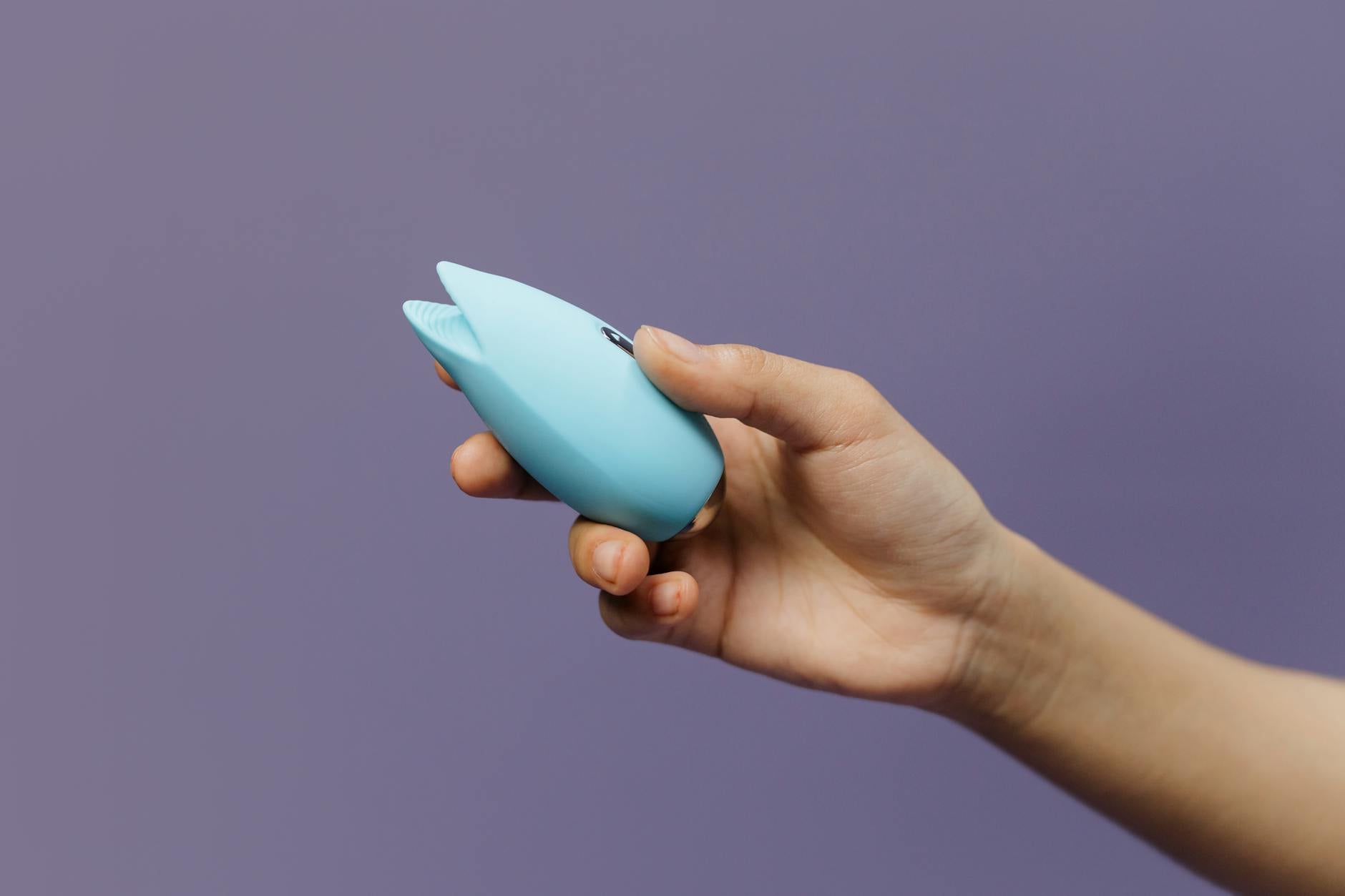
Lemon vibrators, especially suction-based tools like the Lem clitoral vibrator, work differently than traditional bullet vibrators for anxiety-driven bodies. Here's why.
Suction creates a focused sensation that demands attention without requiring direct pressure. The clitoral vibrator pulls blood into the tissue, increasing sensitivity even when anxiety has numbed you out. But the real benefit is neurological. Suction sends a strong, distinct signal to your brain that overrides the noise. It's hard to worry about performance when you're experiencing an intense focal sensation.
Lemon adult toys also bypass one of the biggest anxiety traps: the pressure to perform internally. A lemon clitoral vibrator is purely external. There's no pressure to relax the pelvic floor enough for penetration, no goal of squirting or ejaculating, no comparison to partners who feel different. You're just focusing on sensation in one place. That simplicity is wildly calming.
Breaking the tension cycle with the right tool
Tension and arousal are opposing states. You can't genuinely relax while simultaneously pushing toward orgasm. But you can use sensation to trick your nervous system into relaxing first, and arousal follows.
When you use a lemon vibrator while deliberately slowing your breath and letting your shoulders drop, something shifts. The clitoral vibrator sends a steady stream of sensation that requires attention, but not effort. Your mind quiets. Your pelvic floor begins to soften. Blood flow redirects. Sensitivity increases.
Many people find that starting with low intensity (pattern 1 or 2 on a Lem vibrator) for 5-10 minutes, without the goal of orgasm, is the actual fix. You're teaching your nervous system that this is safe. You're practicing attention. You're rebuilding the pathway between thought and sensation.
Once your nervous system learns that this sensation equals safety, not performance pressure, arousal actually speeds up. The next time, you warm up faster. The time after that, even faster.
Anxiety + pelvic floor tension + numbness
Here's a complication: anxiety creates pelvic floor tension, which restricts sensation and makes everything feel numb. And when you feel numb, anxiety gets worse because you blame yourself. "I should be enjoying this." "Something's wrong with me." "My body's broken."
It's not broken. Tension and numbness are a feedback loop.
Clitoral suction helps break that loop because the sensation is strong enough to cut through tension without requiring you to consciously relax the pelvic floor. As the blood flow increases and the tissues become more responsive, tension naturally softens. You don't have to force relaxation. It happens as a side effect of increased sensation.
One client described it as "I stopped trying to relax and just let the vibration do its job, and that's when my body actually released."
The partner conversation (if that applies)
If you have a partner, here's what I'd say: anxiety-driven slow arousal often has nothing to do with lack of attraction to them. It's about nervous system state. And the quickest way to help is to name it directly. "I want this. My brain is just running interference. Can we give me ten minutes with my Lem vibrator while you're nearby? Not to avoid you. To get my nervous system into a space where I can actually feel you."
A lot of partners actually find this clarifying. It separates their insecurity ("Is it me?") from what's actually happening (anxiety response). And it gives both people something concrete to do instead of trying to force arousal through willpower.
Many couples find that solo play with a lemon clitoral vibrator, either together or nearby, actually improves partnered sex. Why? Because the anxious partner gets to rebuild confidence in their own capacity for pleasure. That confidence changes everything.
When to stack tools
If anxiety is really thick, you might combine a Lem vibrator with breathwork, a short grounding practice (5-minute body scan), or even low-dose magnesium before sex. None of those alone will solve the problem. But together they signal to your nervous system: this is safe, this is pleasurable, you can let go.
Some people also find that using a lemon vibrator earlier in the day, solo, when there's zero performance pressure, rebuilds baseline confidence. By evening, when they're with a partner, the nervous system is already primed.
The timeline is slower than you'd like
I want to be honest: rewiring anxiety-driven arousal takes weeks, not days. Your nervous system needs repetition to learn that this context is safe. But the pattern is predictable. Week one: barely feel anything, or feel it but stay anxious. Week two: physical sensation increases, mental noise decreases slightly. Week three: you notice desire returning. Week four: arousal is noticeably faster.
That's not because the Lem vibrator suddenly got better. It's because your nervous system finally believes it's safe to respond.
FAQ
Does using a vibrator make anxiety worse during sex?
No, but it can if you're using it as a performance band-aid instead of a nervous system reset tool. The difference: if you use a clitoral vibrator while still in your head, still anxious, still pushing toward a goal, it just amplifies the frustration. But if you use it as a focal point to interrupt anxiety and bring attention back to your body, it calms the nervous system. The tool works best when the intention is pleasure, not performance.
How long should I use a lemon vibrator before trying partnered sex?
I usually recommend solo exploration for at least two weeks before reintroducing a partner. That gives your nervous system time to decouple arousal from performance pressure. Once you've had a few solo sessions where you feel genuinely relaxed and aroused, you're ready to explore with a partner present. Even then, keeping the vibrator in the mix during partnered play is totally valid. Many people find it lowers their anxiety significantly.
Can anxiety-driven slow arousal be permanent?
No. Anxiety-driven arousal issues are responsive to nervous system work. They're not a character flaw or a permanent sexual dysfunction. Once you interrupt the loop a few times, your body remembers what arousal actually feels like, and it gets easier. The lemon clitoral vibrator is just the tool that makes that interruption possible.
What if the vibrator feels overwhelming at first?
Start with pattern 1, the lowest setting, for just 30 seconds to a minute. Build tolerance gradually. Sometimes anxiety shows up as sensation sensitivity, and you need to prove to your nervous system that the sensation is safe before you can enjoy it. Slow progression is not failure. It's smart nervous system work.
Should I tell my partner I'm using a lemon vibrator for anxiety?
Yes, if you have a partner who's involved in your sexual life. Frame it as a tool that helps you get more present, not as a replacement for them or a reflection on attraction. Most partners appreciate the honesty and the fact that you're taking an active role in solving the problem instead of waiting for them to fix it.
Is anxiety-driven slow arousal the same as responsive desire?
Not quite. Responsive desire is your natural pattern. You don't feel spontaneous arousal, but you warm up quickly once touch starts. Anxiety-driven slow arousal is when anxiety is actively blocking your ability to warm up at all. They look the same on the surface, but the fix is different. Responsive desire just needs more foreplay. Anxiety-driven slow arousal needs nervous system regulation first, then foreplay.
You're not stuck
Anxiety is loud and convincing. It tells you that this is permanent, that something's wrong with you, that your body's betrayed you. None of that is true. Your body is working exactly as designed. And once you understand what's happening, you can work with it instead of against it. A lemon vibrator isn't a miracle. It's a tool that helps your nervous system remember what safety feels like. And once it remembers, arousal comes back. Not immediately. But reliably.
If this resonates and you want more support, reach out. That's what we're here for. Contact Hello Nancy for personalized guidance on rebuilding sexual confidence and pleasure after anxiety.