Let's talk about what happens to desire when your relationship changes
Libido doesn't just vanish because you've ended a relationship or started a new one. What actually happens is more subtle and way more fixable than the panic usually suggests. Your body and brain are responding to emotional safety, novelty, vulnerability, and the absence of routine in exactly the ways they're supposed to. That's not dysfunction. That's information.
Here's what I see in my practice again and again: Someone ends a long-term relationship and suddenly doesn't recognize their own desire. Or they meet someone new and feel nothing for months, even though they're attracted. Or they've been with a partner for years and sex has become predictable enough that it barely registers. In every case, people assume something is permanently broken. It's not. It's a recalibration.
Why desire takes a hit after relationship transitions
Three things happen in your brain and body when a major relationship shift occurs.
First, safety recalibrates. Sexual desire requires a specific kind of psychological safety that's tied to predictability and trust. When you leave a partner or start with someone new, that safety system is offline. Your nervous system doesn't know what to expect yet. It's busy assessing threat level, not prioritizing pleasure. This is a feature, not a bug. It kept your ancestors alive. It's just annoying when you want to feel sexy.
Second, novelty creates friction. New partners mean a completely different body, different touch, different rhythm, different emotional texture. Your nervous system has to learn someone from scratch. That learning period genuinely taxes arousal because your brain is running diagnostics. Meanwhile, long-term partners mean zero novelty, which can dull sensation through sheer familiarity. The brain stops paying attention to what feels the same every time.
Third, identity gets messy. After a breakup, you're often reorganizing who you are outside that partnership. After starting something new, you're figuring out who you are in it. Solo, you're not sure which desires are yours versus inherited from the relationship. All of this cognitive load lives in the same neurological real estate as arousal. One gets crowded out by the other.
This is why how lemon vibrators help restore pleasure after antidepressants applies here too. The mechanism is different, but the outcome is the same. You need a tool that doesn't depend on external variables while you're reorganizing internally.
How lemon vibrators work differently during relationship transitions
A lemon clitoral vibrator operates on suction, not just vibration. That difference matters enormously when your nervous system is trying to rebuild trust in pleasure.
With a partner, you're always managing their rhythm, their pressure, their needs. Your attention is split. With a lemon vibrator, you're alone with a single, consistent sensation. No negotiation. No mirrors. No waiting for someone else to read the room. The suction pattern on a device like the Lem is predictable in a way that partners literally can't be. That predictability is exactly what your nervous system needs to feel safe enough to release.
The sensation itself is different too. Suction stimulates nerves in a gentler, more distributed way than traditional vibration. After emotional turbulence, a lot of people find direct, intense vibration feels too demanding. Suction feels like permission. It feels less clinical and more like receiving.
Using a lemon vibrator to reconnect after a breakup
If you're rebuilding solo, the goal is to relearn what you actually like without anyone else's preferences in the equation.
Start without any goal of orgasm. This sounds counterintuitive, but it works. Set aside 15 to 20 minutes where you're not trying to get anywhere. This is exploration, not performance. Use water-based lube. Start your lemon vibrator on the lowest setting. Notice what pattern feels good. Notice where. Notice the rhythm that makes you want more of it.
You're literally re-teaching your body that pleasure is safe and that you deserve to know what you want. After a breakup where you may have suppressed your own desires or compromised for years, this is rebuilding something real.
Do this a few times before involving a partner. You need to know your own map first.
Using a lemon vibrator with a new partner
If you're with someone new and desire feels frozen, the block is usually about safety and vulnerability. You don't know them well enough to relax yet, even if the attraction is real.
This is where solo exploration becomes foreplay research. When you know what a lemon vibrator does for you, you have information to bring to a partner. You know the pressure, the rhythm, the pattern. You can tell them. You can show them. You can ask them to use one on you.
Involving a clitoral vibrator with a new partner also takes pressure off them to be the only source of your pleasure. Which means less performance anxiety for them, which means better sex for both of you.
Rebuilding desire in a long-term relationship
Long-term partners get numb to each other's bodies. This is real and it's common. The antidote is novelty within the familiar, and lemon vibrators are weirdly good at that.
Introduce one to your existing sex life not as a substitution but as a variable. Use it sometimes, not always. Use it in different positions. Try it during foreplay instead of during sex. Let it be the main event one time and a supporting player another time. The newness of sensation shakes the nervous system awake without asking either of you to change who you fundamentally are.
The other thing that happens when you introduce a lemon vibrator in a long-term relationship is that it gives the conversation about desire permission to exist. When you're using a tool, you're implicitly saying, 'I want this to feel good for both of us, and I'm willing to try something.' That's vulnerability. Partners respond to that.

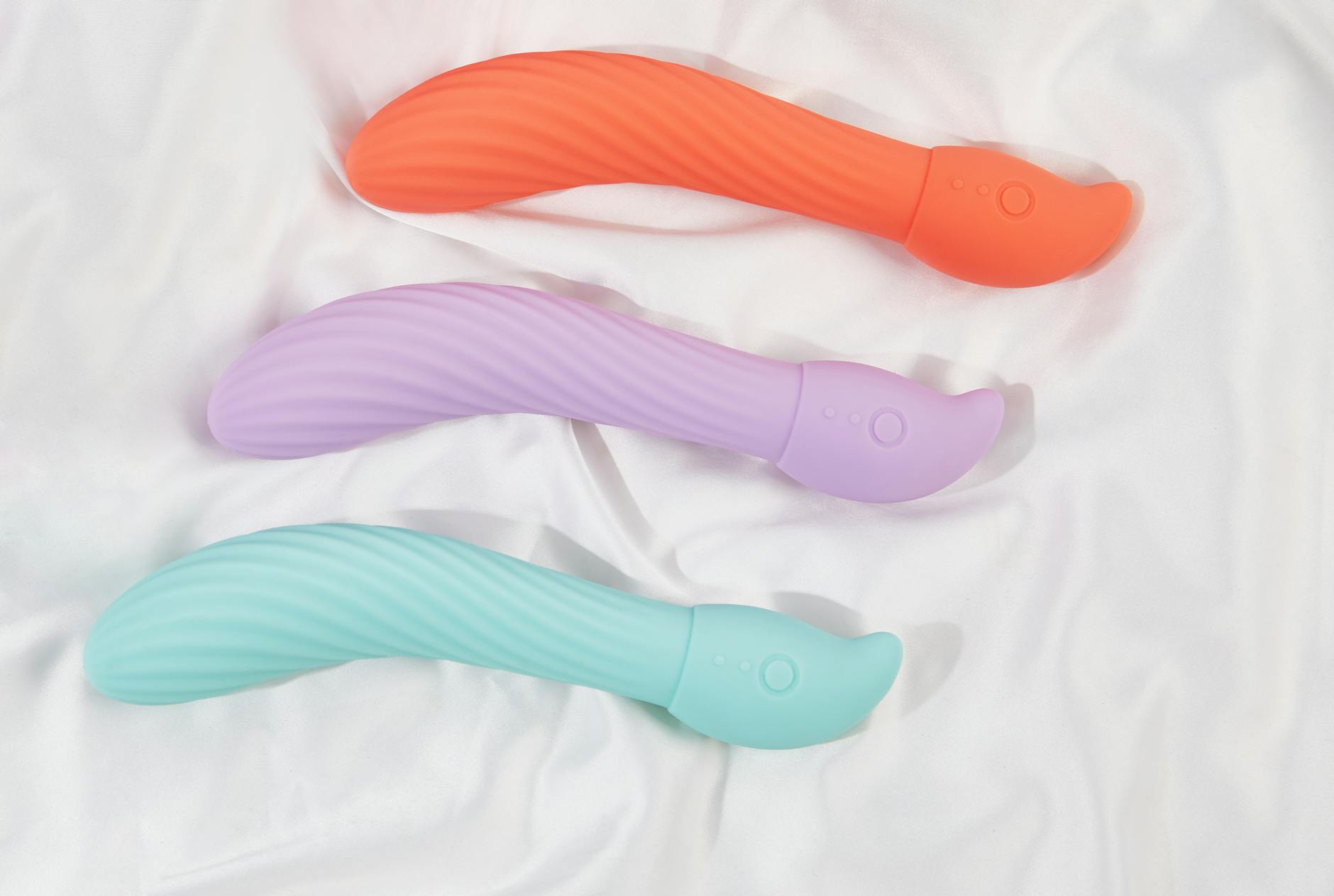
Photo by Madison Inouye on Pexels
The confidence piece that nobody talks about
Here's something that surprised me in my own research and in conversations with clients: Using a device that actually works restores confidence faster than almost anything else.
When desire has been low, a lot of people internalize it as a personal failure. Something is wrong with me. I'm broken. I don't want sex anymore. Then they use something like a lemon clitoral vibrator and feel genuine pleasure for the first time in months. That's not minor. That's a complete reframing. Your body works. You're not broken. You just needed the right conditions.
That confidence shift bleeds into other parts of your relationship and life. You know what you deserve. You're more willing to ask for it. You're less apologetic about your own pleasure.
Physical tips that matter
A few tactical things that help when you're rebuilding desire through relationship changes.
Use water-based lube. Especially important after a breakup because stress can genuinely reduce natural lubrication, and you don't want friction to block sensation. Apply it generously.
Timing matters more than you think. Don't use a lemon vibrator when you're stressed about the relationship or the person. Wait until you're curious, not desperate. Desperation creates tension. Curiosity creates opening.
Start low. If you haven't used a device in months or years, your sensitivity has likely returned to baseline. Start on setting one or two, then work up. You can always increase intensity. You can't un-ring the bell of overstimulation.
Consider using it during a partner interaction only after you've used it solo several times. Your nervous system needs to know that pleasure from a device is safe before adding the complication of another person watching or involved.
When to involve a therapist
If libido has been low for more than six months after a relationship change, or if it's tied to depression or anxiety about the transition itself, talking to someone helps. A good therapist can separate what's normal recalibration from what might need more support.
If you're with a partner and desire is missing entirely, couples therapy gives you the actual tools to rebuild that conversation. You deserve professional support for that kind of work.
People also ask
Q: Is using a lemon vibrator solo going to make partnered sex feel boring?
No. Actually the opposite. When you know what good sensation feels like, you're better at communicating it to a partner. You're less likely to settle for mediocre. That's not a loss. That's you knowing your own value.
Q: How long does it usually take for desire to come back after a breakup?
It varies, but in my experience, the reconnection phase takes about three to four months of consistent solo exploration. That doesn't mean orgasming four times a week. It means regular, pressure-free time with a device where you're learning your own body. After that, confidence usually follows, and then desire builds from there.
Q: Can I use a lemon vibrator if I'm with someone new but not ready to involve them yet?
Completely. This is actually how I usually recommend it. Use a lemon clitoral vibrator solo until you feel confident and safe in your own pleasure. Then decide if and how you want to include your partner. You're not hiding anything. You're preparing.
Q: Do I need to tell my partner I'm using a vibrator?
That depends on your relationship. If you're rebuilding trust and communication, transparency usually helps. If you're just getting to know yourself again privately, that's fine too. But I do recommend not keeping it a secret long-term, especially if you're thinking about sharing pleasure later. Secrecy creates distance.
Q: What if I use a lemon vibrator and still don't feel anything?
Then it's time to talk to a doctor or therapist. Low libido can be tied to hormonal changes, medication, or depression that needs professional support. A lemon vibrator is a tool for rebuilding when the system is intact. It's not a fix for everything.
Q: How is a lemon vibrator different from a traditional vibrator for this situation?
Traditional vibrators use steady vibration, which can feel more intense and demanding when your nervous system is already fragile. Suction-based lemon vibrators feel gentler, more distributed, and many people find them less clinical. But honestly, the device matters less than consistency and patience with yourself.
The bottom line
Low libido after a relationship change isn't a sign that something is wrong with you. It's a sign that your nervous system is being smart about safety and reorganization. You're not broken. You're just recalibrating.
A lemon clitoral vibrator gives you a way to rebuild confidence, learn your own body, and create safe pleasure while bigger transitions are happening. It's a tool, not a cure. But the right tool at the right moment can change everything.
Start solo. Be patient. Use lube. Notice what feels good. Then decide how and if you want to share that with someone.
If you want to talk through your specific situation or how to reintroduce pleasure into your relationship, reach out. That's what I'm here for.