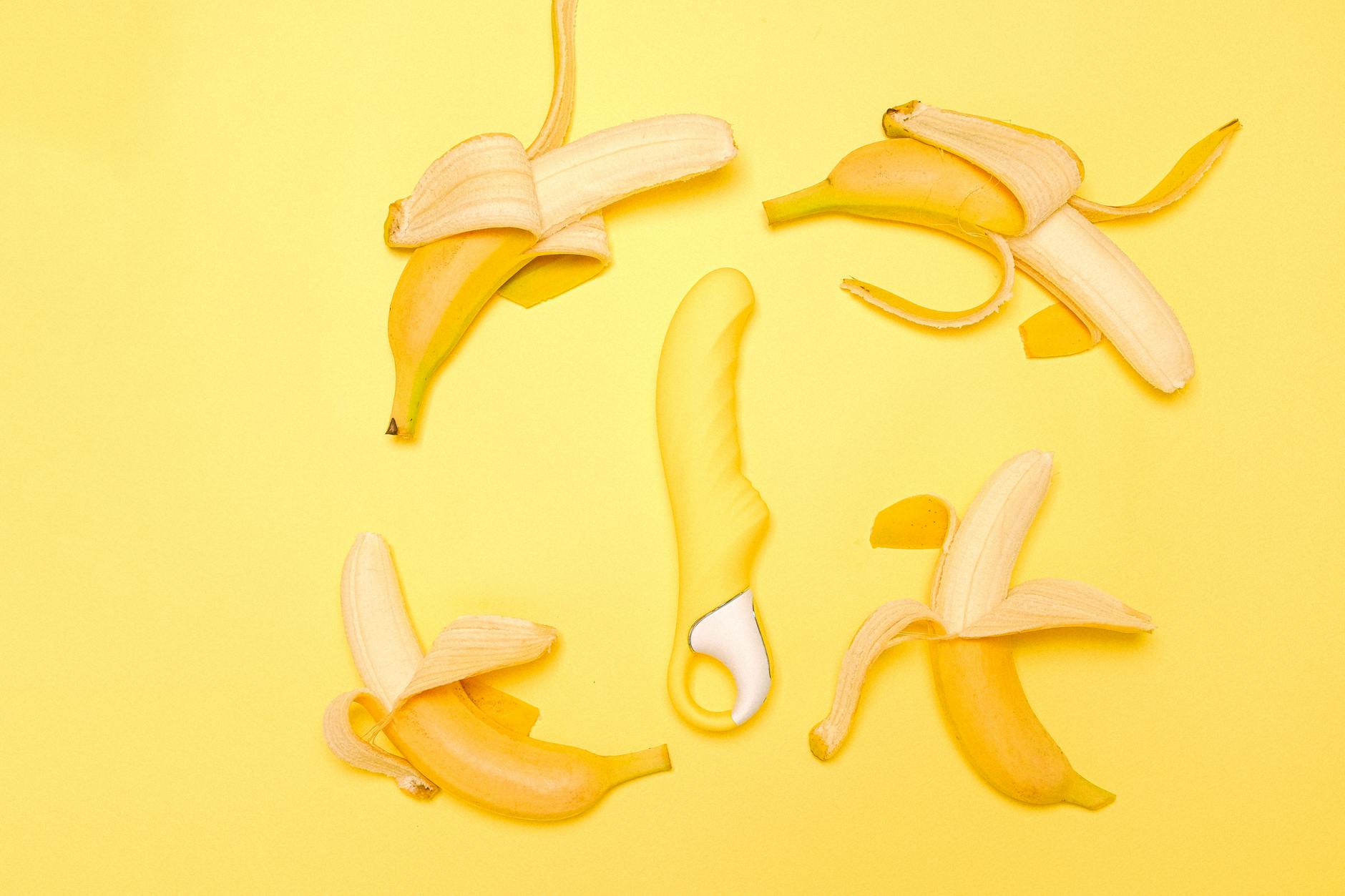
The thing nobody tells you about picking your first vibrator
Let's be real. Walking into this decision feels like showing up to a party where everyone else speaks the language and you're frantically Googling "vibration intensity" at midnight. The good news is that choosing your first lemon vibrator doesn't require secret knowledge. It requires honesty about three things: your body, your environment, and what actually turns you on.
Here's what I see happen with new buyers. They either pick the cheapest option to "test the waters," which backfires because a mediocre first experience with a lemon clitoral vibrator teaches you nothing about what you actually like. Or they buy something based purely on aesthetics, only to discover it's either too intense, too quiet, or the wrong shape entirely. Both paths lead to a drawer queen. I want your first lemon sexual toy to be something you actually reach for.
Start with sensation, not specs
Every product description talks about power levels and battery life. Those matter, but they're not where you start. You start with sensation type.
Clitoral vibrators come in two main sensation families. The first is direct stimulation, where the vibration hits the head of the clitoris straight on. This works beautifully if you like precision and direct pressure. The second is suction or air-pulse stimulation, where gentler waves of pressure build sensation without the mechanical buzz feeling. A lemon sucker, for example, creates suction rather than vibration. This matters because if you're someone who finds direct vibration overwhelming, a suction-style toy changes the entire experience.
How do you know which you'll prefer before you buy? Think about what you like when someone touches you. Do you want steady, focused pressure? That's direct stimulation territory. Do you prefer waves of sensation that build and shift? Suction-style will probably feel better.
If you're genuinely unsure, suction or air-pulse designs are often easier for first-time users because they tend to feel less jarring and allow more time to build arousal gradually. That's not because they're "gentler"—they're actually quite powerful. It's because the sensation builds rather than arriving all at once.
Pick your size and weight range
This seems obvious until you realize it isn't. A vibrator that's too heavy gets tiring. Too light, and you lose the feeling entirely. Too large, and you can't position it where you need it.
Most lemon clitoral vibrators are between 3 and 5 inches long, which means they fit easily in your hand and between your thighs. Weight typically ranges from 100 to 180 grams, which is roughly the weight of a smartphone. You want something that feels substantial enough to handle without losing it, but light enough that your hand doesn't cramp after 10 minutes.
If you have limited hand dexterity or arthritis, weight matters more. Lighter is genuinely better. If you're taller with a larger frame, you might find a slightly larger toy more satisfying simply because it feels more present in your hand.
The head shape also matters here. Some lemon sexual toys have a flat stimulation surface, which works better if you like broad coverage. Others have a narrower tip, which gives you more precision. This isn't about what's "better." It's about what your body will enjoy. If you've noticed you like focused pressure during manual stimulation, a narrower head will probably feel more satisfying.
Noise is either a real factor or it isn't
Let's address this directly: some vibrators are loud. We're talking 60–80 decibels, which is roughly vacuum-cleaner territory. Some are whisper-quiet, around 40–50 decibels.
If you live alone or have a partner on board, noise might not matter. If you share walls, have roommates, or want privacy, it matters enormously. You need to know your actual situation before you choose, because discovering your new toy sounds like an angry wasp at 10 p.m. is the fastest way to stop using it.
Most quality lemon clitoral vibrators hit somewhere in the middle—quiet enough for most situations, not library-silent. If stealth is crucial, ask explicitly. Some brands publish decibel ratings. If they don't, that's usually a sign it's not their strong point.
Power and patterns. Probably less important than you think.
Manufacturers love listing 10, 15, or even 20 vibration patterns. Here's the secret: most people use one or two. The ones they actually like.
Don't pick a toy because it has the most patterns. Pick it because the patterns it does have appeal to you. A simple, steady vibration often outperforms a toy with 15 gimmicky patterns that you never actually use.
Power matters more than variety. A toy with fewer patterns but strong, consistent vibration tends to deliver better orgasms than something with everything dialed down to seem "user-friendly." You want power you can dial down if needed, not a toy that maxes out too low.
If you're someone who needs consistent sensation to reach orgasm, steady vibration beats patterns every time. If you like novelty and variation, more patterns might appeal to you. But honestly, once you find the pattern that works, you'll stick with it.
Material: silicone, glass, or metal
Most quality lemon vibrators come in medical-grade silicone, which is nonporous, easy to clean, and comfortable against skin. It's the gold standard for a reason.
Some people prefer the feel of glass or stainless steel because they don't absorb sensation the way silicone does. They also feel cooler to the touch, which some people find incredibly satisfying. The downside is they're less forgiving if you drop them, and they conduct temperature differently, so you might need to warm them up or cool them down depending on preference.
For a first-timer, silicone is the easiest entry point. It's durable, feels good, and doesn't require any special handling.
Battery life and charging
A toy that dies mid-session is an unfun surprise. You want at least 90 minutes of continuous use from a single charge, ideally two hours. That sounds like overkill until you realize that if you're building arousal slowly and taking breaks, a shorter battery is genuinely limiting.
USB charging is now standard, which means you can top up almost anywhere. Avoid anything that still requires proprietary chargers or—honestly—anything that uses disposable batteries. That's 2006 tech.
If you travel, charging speed matters. If you need 8 hours to charge your toy, that's friction you'll resent.
The thing that actually seals the deal
After sensation type, size, noise, and power, the final decision point is usually price and reviews from people like you.
With lemon sexual toys, you're not paying for a brand name. You're paying for engineering. A well-designed suction toy costs more than a basic vibrator because the engineering is actually harder. That's worth the investment.
Find reviews from first-time buyers specifically, not people who already own 12 toys. They'll tell you what matters: Did it feel good? Was it intuitive? Did it break after three weeks? Did the noise wake up a sleeping partner? Those are the real questions.
Your first lemon clitoral vibrator should feel like a choice you made with your eyes open, not a gamble.
Common traps to avoid
Picking based on how it looks. A gorgeous, Instagram-ready toy that doesn't feel good is worse than a functional one that looks boring. You're not decorating. You're building your pleasure.
Buying the cheapest option to "test the waters." A $20 toy often teaches you nothing except that you wasted $20. A thoughtfully chosen $60–$80 lemon vibrator will show you what you actually enjoy.
Assuming more power is always better. If you start with a jackhammer, you'll either go numb or never try anything else. Medium power with good patterns beats maximum power every time for beginners.
Forgetting that sensation changes. What feels amazing at 25 might feel overwhelming at 35. What works when you're relaxed feels different when you're anxious. Your needs aren't fixed. Your first toy doesn't have to be your forever toy.
How to actually make the decision
Write down three things: your sensation preference (direct or suction), your noise tolerance (private or shared space), and your realistic budget. Then look for toys that check all three boxes.
With those three anchors, the choice becomes obvious. You're not choosing between 50 options anymore. You're choosing between maybe three.
Read recent reviews from first-time buyers. See if people mention things that matter to you. Then stop researching and buy it.
The worst decision is waiting forever and never choosing anything. Your first lemon vibrator doesn't have to be perfect. It just has to exist.
People also ask
What's the best lemon vibrator for complete beginners?
The Lem is specifically designed for first-time users. It uses suction rather than vibration, which means the sensation builds gradually rather than arriving all at once. That makes it easier to learn what you like without getting overwhelmed. It's also quiet, fits easily in your hand, and has simple controls. For most people trying a lemon clitoral vibrator for the first time, it's a solid choice because it teaches you about your body without demanding anything from you.
How do I know if I'll like vibrators at all?
Honestly? You won't know until you try one. But here's what helps: think about what feels good when someone touches you manually. If you like pressure and steady sensation, vibration will probably appeal to you. If you're sensitive to overstimulation, you might prefer suction. The sensation is different enough that people who don't love vibration sometimes love suction, and vice versa. Your first toy is an experiment, not a commitment.
Can lemon sexual toys be too intense?
Yes. That's why starting with something that has adjustable power and maybe a smaller head is smart. You can always turn power up. You can't un-feel something that's too much. If your first toy turns out to be overwhelming, it's not a failure of you. It's a mismatch between the toy and your current sensitivity. Different toys, different settings, or different timing will change everything.
Do I really need to spend $80 on a lemon vibrator?
You don't need to, but you probably should. A $20 toy is usually cheap engineering, which means short battery life, unreliable motors, or materials that feel plasticky. With a quality lemon clitoral vibrator in the $60–$90 range, you're paying for durability and design. It'll last years instead of months, which actually makes it cheaper over time.
Should I tell my partner I'm buying a vibrator?
That's between you and your partner, but here's my clinical take: secrecy usually creates more friction than honesty. If you're in a relationship and anxious about this, it often helps to frame it as something about your pleasure, not something about them. "I want to explore what feels good to me" is different from "I'm not satisfied." Many couples find that exploring solo actually improves partnered sex because you know your body better.
What's the difference between a lemon vibrator and other clitoral vibrators?
Lemon sexual toys refer to a specific brand design and aesthetic, but functionally they work like any other clitoral vibrator. The design appeals to certain people because it's discreet, looks intentional on a nightstand, and the suction mechanism (in the Lem specifically) creates a distinct sensation that many people prefer. Beyond that, it's about whether the specific design matches your needs and preferences.
Next steps
You don't need more information. You need to choose. Pick one of the three finalists you've researched, read the reviews, and buy it. Then actually use it, which is the part most people skip.
Your pleasure matters. Your first lemon vibrator is the beginning of understanding what actually feels good, not a referendum on who you are or what you should want. Start with honesty about your body and your situation, ignore the hype, and let yourself be curious.
If you're still stuck between options or want to talk through what might work best for your specific situation, reach out. That's what I'm here for.