Let's start with what nobody tells you
Your clitoris doesn't age like your face or your hands. But it does change. For some people, that change arrives as a loss. For others, it's the opposite. The problem is nobody talks about the middle ground where most of us actually live.
The truth is that clitoral sensitivity evolves across your lifespan. In your twenties, direct stimulation might feel electric and instant. By your forties or fifties, that same kind of touch might feel too sharp or numb or weirdly distant. That's not dysfunction. That's biology doing its job. And once you understand what's happening, lemon vibrators and clitoral suction devices become tools that work with your body instead of against it.
Why clitoral sensitivity actually changes
Three things happen as you age. First, skin loses elasticity and thickness. The clitoral hood gets less support from estrogen, which means the glans (the sensitive tip) has less natural cushioning. That's why direct pressure sometimes feels too intense where it used to feel perfect. Second, nerve density doesn't change, but nerve responsiveness does. Your clitoris needs longer to wake up and a different pattern to reach peak sensation. Third, blood flow patterns shift. Arousal takes longer to build because blood vessels are less efficient at that rapid engorgement your body relied on at twenty-five.
Here's the part that gets buried in medical textbooks. All of this is highly individual. Some people report their sensitivity sharpening with age. Others describe a kind of spreading out. The research says we should expect dulling, but real bodies don't read the literature.
The suction advantage: why lemon vibrators work differently
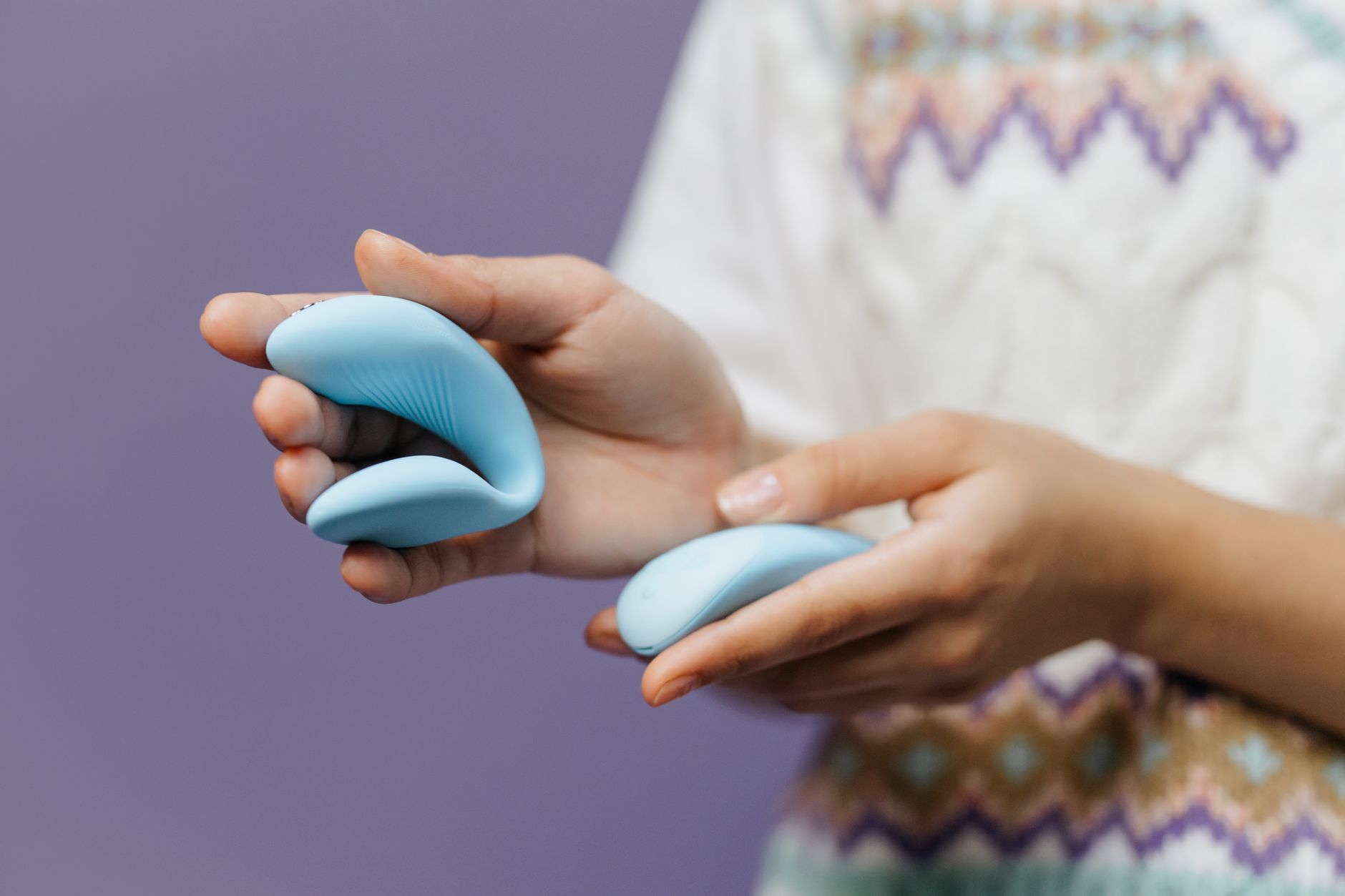
This is where the Lemon clitoral vibrator and similar suction-based tools make sense. Traditional vibrators move side to side or up and down. They apply direct mechanical friction. When your clitoral tissue is thinner or your sensitivity threshold is higher, that friction can overstimulate. It can also undershoott if you need more intensity to register sensation at all.
Suction stimulation works on a completely different principle. Instead of mechanical friction, the Lem creates a gentle vacuum and release pattern. This stimulates the entire clitoral network, not just the surface. For people experiencing sensitivity changes, that means you get deeper, more distributed sensation with less direct pressure on delicate tissue. The effect is often described as more diffuse and less sharp. Many clients tell me this feels less like being touched and more like being drawn into sensation.
That distinction matters when your body's waking up differently than it used to.
Starting slow with sensitivity that's heightened
If your clitoris has become more sensitive to touch as you've aged, start at the lowest setting of your lemon vibrator. Hello Nancy's Lemon clitoral vibrator has multiple intensity levels specifically for this reason. Begin at setting one and spend five to ten minutes just exploring. You're not racing toward orgasm. You're learning what your body is telling you at each level.
Many people with heightened sensitivity find that the warm-up period is crucial. Spend fifteen to twenty minutes with your partner or alone on other areas. Let arousal build gradually. When you finally bring the lemon vibrator into the picture, your clitoris will be ready rather than shocked.
Lubrication helps even when you're not experiencing dryness. A little water-based lube on the lemon vibrator's cup creates a smoother sensation and reduces any friction that might feel irritating. You're not fixing anything. You're removing a barrier between your body and pleasure.
When sensitivity feels duller and you need more
The opposite problem shows up for plenty of people. Your clitoris doesn't respond to what used to work. Orgasm feels farther away. You need stronger, more consistent stimulation to reach it. This is when lemon vibrators shine because they deliver both intensity and pattern complexity that older toys can't match.
If you're experiencing this, move up the intensity levels intentionally. Don't start at the bottom and stay there out of habit or shame. Your body needs what it needs. The higher settings on the Lem or similar clitoral vibrators deliver a stronger suction pulse and faster rhythm. That's not excessive. That's appropriate.
Time also matters. If sensation feels muted, you might need a longer session. Thirty minutes instead of fifteen. Your nervous system is slower to engage, and that's okay. Pleasure isn't a sprint. Building it steadily can feel even more satisfying than the quicker version.
Pattern versus intensity: finding your actual preference
Here's what I've noticed talking to people over decades. When you're young, most people chase intensity. As you age, pattern becomes equally or more important than raw power. The rhythm. The pulse. The way sensation rises and falls. Some lemon adult toys have pattern modes. Some are just intensity levels. Both work. The question is what your body is actually asking for.
If your clitoris has changed, experiment with pattern before assuming you need more power. Sometimes a complex rhythm at medium intensity feels more satisfying than maximum power in a straight line. This goes back to that distributed sensation the suction model provides. You're not looking for one nerve to fire. You're waking up the whole system.
Take time to figure this out. Your body isn't being difficult. It's being itself. And lemon vibrators let you adjust quickly without having to buy an entirely new toy.
The role of mental state and arousal time
I'd be remiss not to mention this. Age changes arousal in your brain too. At twenty, you might have gotten turned on by a photo. At forty-five, you might need a full sensory experience. Story, touch, context, mood. The clitoris doesn't exist in isolation. It's part of a nervous system that's affected by stress, relationship quality, medication, body image, and a thousand other factors. Sometimes what feels like a sensitivity change is actually your brain asking for more foreplay or a different kind of mental engagement.
Before you assume it's purely physical, check in honestly. Are you aroused? Are you relaxed? Are you with someone you trust? Are you thinking about work or your kids? The lemon vibrator is a tool. But it works best when the rest of your attention is actually in the room.
If you're struggling with arousal time or mental engagement alongside physical changes, that's worth a conversation with your partner or therapist. There's no shame in it, and often the solution is part logistics, part communication, part sex toy adjustment.
Managing expectation and grief
I want to name something that doesn't get named enough. If your clitoral sensitivity has genuinely changed and you're mourning the old sensation, that's a real loss. Your pleasure lived in a certain way and now it lives differently. Some people grieve that. Some celebrate the chance to discover something new.
Both are valid. Grief and pleasure aren't incompatible. You can wish things felt like they used to and still be able to have excellent orgasms now. Those two truths live together.
What I know from working with people in long-term relationships and long bodies is that the pleasure doesn't end. It evolves. And once you stop fighting the evolution and start working with it, you often find something richer. Not better or worse. Different. And sometimes that different is the thing you needed all along.
Practical starting point
If you're not sure whether heightened or dulled sensitivity is your situation, here's an experiment. Spend one week masturbating without any device, just your hand. Notice what pressure feels good. Notice the speed and rhythm your body gravitates toward. That's your baseline. Then introduce the lemon vibrator at the setting that matches that rhythm and intensity. You're translating what your body already knows into a new tool.
From there, expand. Try one level up. Try a pattern instead of straight vibration if available. Notice what happens. Your clitoris knows what it needs. The tool is just the translator.
People also ask
Does clitoral sensitivity always decrease with age?
Not necessarily. While some people experience reduced sensitivity, others report heightened sensitivity or no significant change at all. The clitoris doesn't have a standard aging timeline. Biology varies dramatically between individuals. Factors like estrogen levels, blood flow, medication, stress, and even relationship quality can influence sensitivity more than age itself. Track your own patterns rather than assuming you'll follow a predictable path.
Can lemon vibrators help if my clitoris feels numb?
Absolutely. Suction-based lemon vibrators often help wake up sensation that feels distant or muted. The Lem and similar clitoral vibrators stimulate the entire clitoral network rather than applying direct friction to a single point. Many people with reduced sensitivity find this pattern of stimulation more effective than traditional vibrators. Start at a lower intensity and work up. Your nervous system might just need a different signal to engage.
Should I use lubricant with a lemon vibrator if I'm not dry?
Yes. Even if lubrication isn't an issue, a small amount of water-based lubricant on a lemon clitoral vibrator reduces friction and changes the sensation in often pleasurable ways. It's not a medical intervention. It's a comfort choice. A smooth glide can feel less jarring if your sensitivity is heightened, and it can amplify sensation if your sensitivity is dulled.
What's the difference between lemon sexual toys and other clitoral vibrators?
Lemon vibrators use suction technology while many other clitoral toys rely on direct vibration or oscillation. Suction creates a gentle pulse and release pattern that distributes stimulation across your entire clitoris rather than concentrating it on one sensitive spot. For people experiencing sensitivity changes, this broader distribution often feels more comfortable and more satisfying. The Lem and similar lemon adult toys also tend to have multiple intensity levels, giving you more control over how much sensation you're receiving.
How do I know if I need more intensity or more patience?
Give your arousal time. Spend fifteen to twenty minutes on other touch before bringing the lemon vibrator into the picture. If you're genuinely aroused and relaxed and the lower settings still feel like nothing, move up. If you find yourself tensing or the sensation feels aggressive, you probably need more warm-up or lower intensity, not different equipment. Your body gives you clear signals. The trick is listening to them instead of listening to what you think should be happening.
Can hormonal changes besides menopause affect clitoral sensitivity?
Yes. Thyroid changes, antidepressants, birth control, and fluctuating estrogen at any life stage can all shift sensation. If you've noticed a significant change in sensitivity alongside any other health shift, mention it to your doctor. Many of these changes are manageable. But understanding the cause helps. Your clitoris isn't broken. It's responding to your whole body's chemistry.
What matters most
Your body is the authority on what feels good. Not your age, not what worked before, not what works for anyone else. If lemon vibrators feel right for your sensitivity now, that's the right choice. If you need to explore something different, that's fine too. The point isn't to find the perfect toy. It's to keep showing up to your own pleasure with curiosity instead of shame.
Clitoral sensitivity changes. Your capacity for pleasure doesn't. That's worth remembering every time you feel like something is wrong with you. Nothing is wrong. You're just getting to know yourself again.