
Here's the thing about orgasm differences
One of you reaches climax in three minutes with barely any buildup. The other takes twenty. One needs pinpoint intensity. The other wants broad, rolling waves of sensation. And right now, you're probably treating this like a flaw to fix instead of a feature to work with.
I see this in my practice constantly. Couples arrive believing the "problem" is that they're incompatible. What's actually happening is that they're trying to have the same orgasm, at the same pace, in the same way. That's like asking two people with different body types to wear the same size jeans and wondering why nothing fits.
The good news: this is one of the easiest partnership gaps to close once you stop seeing it as a gap.
Why orgasm timing and intensity differ
Nerve density varies. Arousal pathways are wired differently. Hormones, stress levels, how much you trust your partner in that moment, what you're thinking about mentally—all of it shifts how quickly and intensely someone responds to touch.
Neither preference is better. Neither is "normal." They're just different specifications in how your bodies work.
What makes couples struggle isn't the difference itself. It's the story they've built around it. "You finish too fast" becomes "You don't care about me." "You take forever" becomes "I'm not attracted to you anymore." Suddenly a physiological reality has turned into an intimacy wound.
That's where lemon vibrators—specifically air-suction devices like the Lem—become genuinely useful. Not as a fix. As a translator.
How the Lem works across different orgasm profiles
The Lem is designed with intensity levels 1 through 3 (and higher patterns). This means the partner who needs gentleness has a genuine option: they can start at level 1 and stay there as long as they want. The partner who needs intensity can skip straight to level 2 or 3.
More importantly, you're no longer syncing your nervous systems around one person's timeline. You've decoupled the experience.
Here's what that looks like in practice: say you're a couple where one of you reaches orgasm very quickly with direct clitoral touch, and the other needs a much longer warm-up and sustained pressure to get there. Historically, you've either rushed the slow partner or the fast partner has felt guilty and "held back," which kills arousal anyway.
With a clitoral vibrator, the fast partner can use it at higher intensity and reach climax on their timeline. The slower partner can use lower settings, take their time building arousal, and not feel pressure to rush. You're both in the same room, but you're each on your own path.
The conversation that has to happen first
Before you introduce any tool, you need to agree on what you're trying to do. And "fix this" isn't a goal. "Reduce shame around being different" is.
I recommend you sit down—clothed, outside the bedroom—and say something like this to each other: "Our bodies respond differently, and that's completely normal. I want us to find a way where you feel good, I feel good, and neither of us is waiting for the other." That's the actual goal.
Then agree together that trying a lemon clitoral vibrator isn't about one person needing help. It's about both of you getting to have the experience you actually want instead of the compromise version.
The practical setup
There are several ways to structure this, depending on whether you're having partnered sex:
Option 1: Solo, then together. Each of you use the vibrator alone first, figure out which intensity level feels right, how long you typically need. Report back. This removes the pressure of "performing while learning" and builds individual confidence.
Option 2: Parallel play. You're both in bed, both using tools (whether that's a Lem or other lemon sexual toys), both pursuing your own climax on your own schedule. You're present together but not dependent on each other's timing. This is wildly underrated for couples with mismatched preferences.
Option 3: Sequential. One partner reaches climax first using the Lem or another tool from Hello Nancy's Lemon Shop. The other partner then has their turn. No performance pressure. No watching the clock.
Option 4: Integrated with partnered touch. One person uses the lemon vibrator on themselves while the other provides touch elsewhere—kissing, hand on chest, penetration if that's part of your sex life. The vibrator isn't replacing the partner. It's a tool the partner is using as part of the experience you're building together.
The emotional pivot
Here's what shifts when you actually do this. The fast partner stops feeling like they're broken or selfish. The slower partner stops feeling like a project or a problem.
And something unexpected often happens: when neither person is anxious about timing anymore, arousal gets better for both. That anxiety was eating up a lot of space.
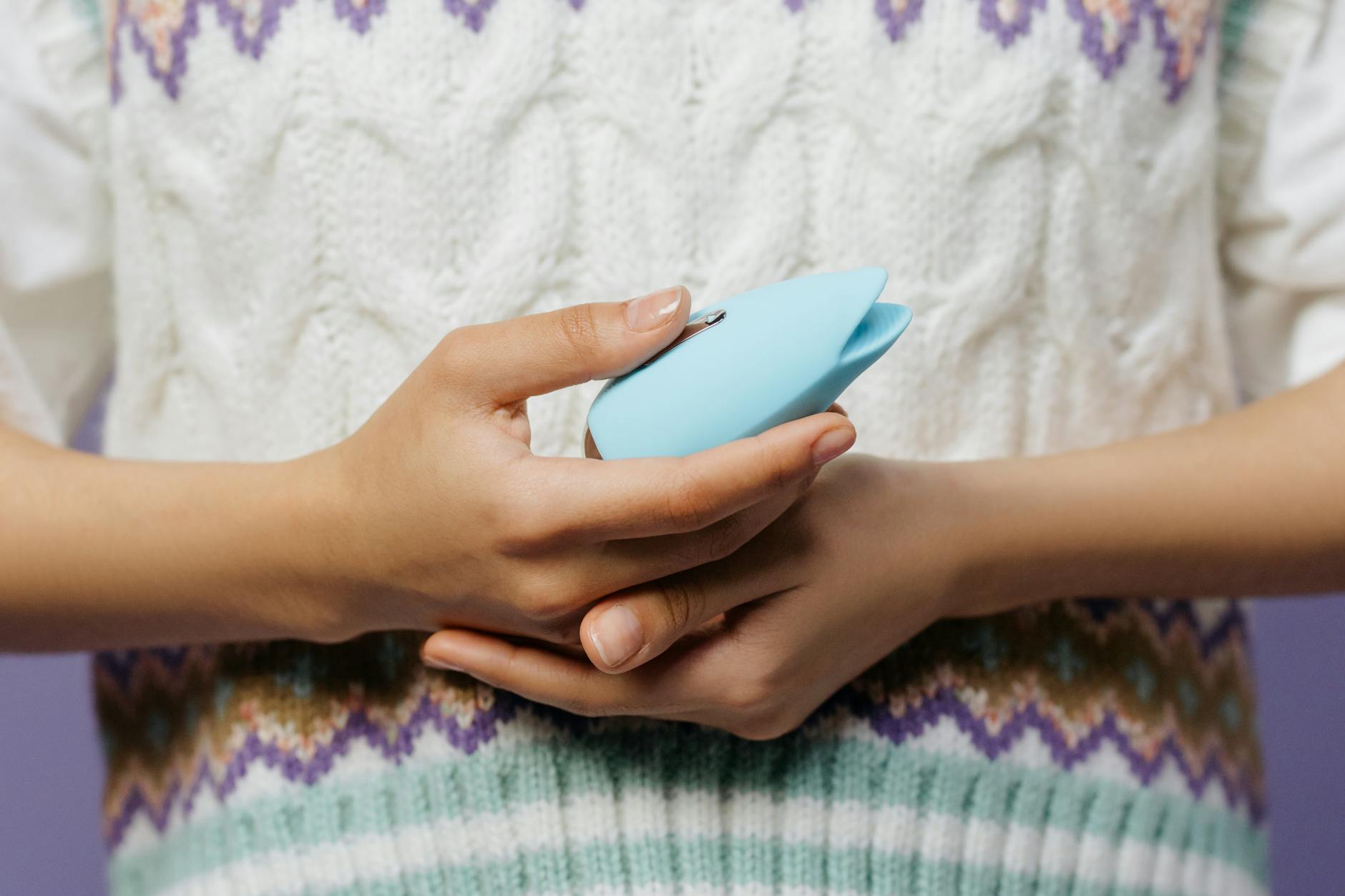
Photo by cottonbro studio on Pexels
I've watched couples report that once they stopped trying to synchronize, they actually had more sex. Because neither was leaving the encounter feeling like they'd failed or been failed. That's not mystical. That's just what happens when you remove shame from the equation.
When to reach for different intensities
You may discover that your preferences shift depending on context. If one partner is very stressed, they might need lower intensity even if they usually prefer high. If the other partner is feeling particularly connected emotionally, they might want higher intensity than usual.
That's normal. A good lemon vibrator—something with multiple intensity levels, like the Lem—accounts for this flexibility. You're not locked into one preference forever. You're building a tool kit.
The conversation after
Don't skip this. After you've tried it, check in with each other. What worked? What felt weird? What would you want to try differently next time?
These conversations are where actual intimacy lives. Not in the sex itself. In the "I saw you trying, and I want to know what that was like for you" part after.
If something didn't work, you're allowed to say that. You're also allowed to try three times before deciding it's not for you. Most couples need a little time to adjust to a new approach. That's information, not failure.
When intensity preferences are really about something else
If one partner suddenly needs much higher intensity to orgasm, or suddenly can't tolerate touch they used to enjoy, something's usually going on below the surface. Stress, relationship tension, health changes, medication side effects. The orgasm preference isn't the root—it's the symptom.
That's worth exploring separately. A lemon vibrator or any other tool might help you manage the symptom, but if the underlying dynamic is unresolved resentment or disconnection, that needs its own conversation.
A good indicator: if you're using a tool and it feels fun and easier, great. If it feels like you're performing or pretending, step back. That's a sign the real work is elsewhere.
Making space for both of you
Your bodies are going to want different things. That's guaranteed. And it doesn't mean you're incompatible.
What it means is you get to stop forcing both of you into a single script. You get to say, "You reach climax fast, that's real. I take longer, that's real. Let's build an experience where both of those things are okay."
That's where tools like lemon vibrators earn their place. Not as a shortcut. As an honest reflection of the fact that good sex, for most couples, means honoring how different you actually are instead of pretending you're the same.
Frequently asked questions
Can we use a lemon vibrator if one partner is much more sensitive than the other?
Completely. In fact, that's one of the strongest use cases. The sensitive partner can start at level 1 and stay there indefinitely. The less sensitive partner can adjust up to find what works. You're not compromising anymore. You're each getting what you actually need.
What if one of us doesn't want to use a vibrator at all?
That's your boundary to respect. A tool is an option, not a requirement. You can absolutely work with intensity differences using hands, pacing changes, and positioning alone. The vibrator just makes it easier and removes some of the physical performance pressure. If your partner isn't interested, don't push it.
Is using a vibrator together a sign we're not attracted to each other?
No. It's the opposite. It's a sign you're invested enough in both of your pleasure to find solutions that work. Most couples eventually incorporate some kind of tool. It's not a failure of attraction. It's problem-solving.
How do we talk about this without making it awkward?
Start outside the bedroom. "I've been thinking about how our bodies respond differently, and I don't want either of us to feel rushed or like a problem. I found this resource that might help." Frame it as a team effort, not a fix for the "broken" person. Because neither of you is broken.
What if trying a lemon clitoral vibrator makes the intensity difference worse?
If the faster partner climaxes much faster with a vibrator, that's information. You might decide to use it only sometimes, or to focus on lower-intensity patterns for shared sessions. Or you might use it for solo play and stick with partnered touch for sex together. There's no one right answer. Adapt based on what actually feels good.
Should we buy one vibrator together or separate ones?
That depends on you. Some couples love sharing one tool because it feels collaborative. Others prefer separate vibrators so there's no negotiation about intensity levels. There's no right choice. Pick what appeals to you both.
The bigger picture
Orgasm preferences are one of the clearest ways partners show each other that they're different. And instead of treating that as a problem, you can treat it as useful information about how to actually pleasure each other better.
The Lem and other lemon sexual toys from Hello Nancy's Lemon Shop exist partly because we stopped pretending all bodies should respond the same way. We built tools that let different bodies have different experiences at the same time. That's the whole point.
Your mismatched preferences aren't a compatibility crisis. They're an invitation to get more creative, more honest, and ultimately closer to each other. Start there.
Ready to explore this together? Reach out if you want to talk through your specific situation. Contact Hello Nancy's Lemon Shop anytime.