Here's the thing about physical distance
Long-term relationship distance, whether it's months of actual separation or years of emotional drift under the same roof, does something specific to your body's response to touch. Your nervous system starts treating your partner's hands like a friendly hug from an acquaintance, not an invitation. Arousal becomes effortful. Touch feels obligatory. And then sex either stops happening or it happens on autopilot, which somehow feels worse.
The frustration isn't that you don't love them. It's that your bodies have forgotten how to talk to each other. I've worked with dozens of couples navigating this exact gap, and what I've noticed is that relearning physical chemistry requires a different script than just "let's try harder." You need a tool that makes arousal feel possible again, removes the pressure of performance, and gives you both permission to slow down. That's where something like a lemon clitoral vibrator comes in.
Why distance breaks physical connection
When you're apart for months or when emotional disconnection settles in, a few neurological things happen. First, your body stops anticipating touch. The dopamine hit you used to get from seeing your partner walk in the room flattens. Second, touch itself can start to feel invasive if you haven't had it regularly, because your skin has essentially downregulated its sensitivity. You're not broken. Your nervous system is protecting itself.
Third, and this matters most: you've lost the micro-rituals of touch. A hand on your lower back while cooking. A kiss on your shoulder while you're reading. These aren't foreplay. They're the low-frequency signals that keep your body remembering it's safe to be aroused around this person. Without them, restarting sex feels like starting from zero.
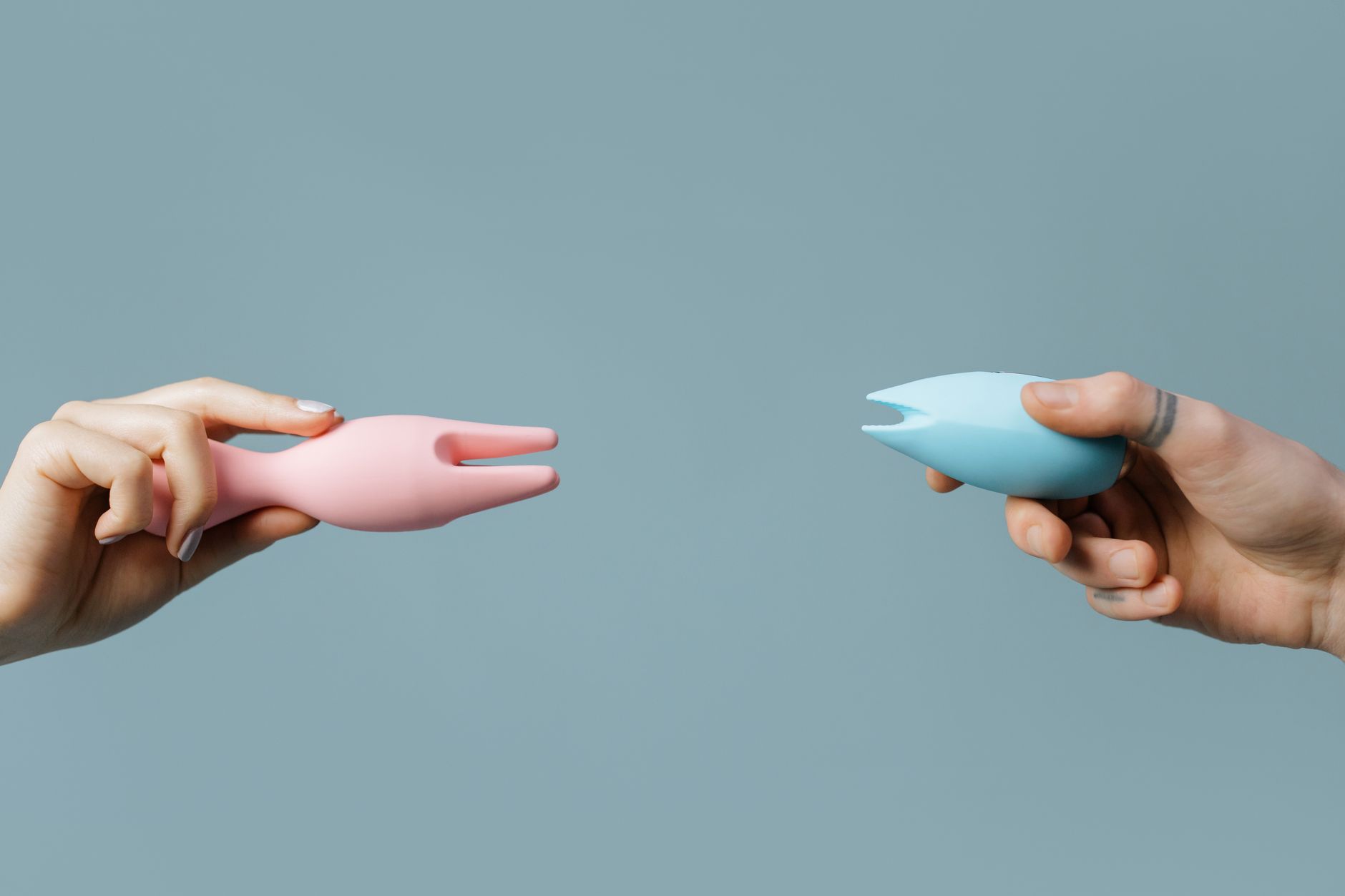
Photo by cottonbro studio on Pexels
The pressure problem and why vibrators help
Here's what happens when couples try to rebuild sex after distance: one person initiates, the other feels performative pressure, and suddenly you're both white-knuckling your way through something that's supposed to feel good. The body tightens. Arousal vanishes. You both leave the bedroom feeling worse.
A lemon clitoral vibrator removes the pressure because it gives you both something to focus on that isn't "is this working." It becomes a shared object, a tool you're using together, which is psychologically different than one body trying to perform for another. The vibrator does the work. Your job is just to be present. For someone who's lost the ability to relax into pleasure, that distinction is everything.
For the partner who isn't receiving direct stimulation, using a lemon vibrator together also increases sensation overall. The vibration creates arousal that's easier to access. It also tends to increase lubrication faster, which means less friction and less anxiety about "will this work." Bodies relax when sensation is clear and reliable.
Starting the conversation
Introducing a vibrator after years of distance requires honesty without blame. Don't frame it as "I need more stimulation because you're not doing it right." That's a conversation killer. Instead, lead with vulnerability: "I've noticed our bodies have gotten used to not touching, and I want to change that. I found something that might help us both relax and actually feel what we're feeling."
The key is presenting it as a couples tool, not a replacement. When someone hears "vibrator," they sometimes hear "I'm not enough," which is rarely the actual problem. The problem is that you've both gotten stuck. A lemon clitoral vibrator is a reset button, not a judgment on anyone's capacity.
You might also name what you're rebuilding: "I miss feeling turned on around you. I want us both to remember that." That's honest. That invites them in.
How to use a lemon vibrator together after distance
Start small. You're not going from zero to full sex right away. You're rebuilding the capacity to feel arousal in your partner's presence.
Session one: Just exploration. Sit together, clothes on, and explore the vibrator. Let them hold it. Let you hold it. You're both getting used to the object without any stakes attached. This sounds silly, but your nervous system actually needs this. You're signaling "this is safe, this is curiosity, not performance."
Session two: Slow undressing. One person sits back and uses the lemon vibrator on themselves while the other watches and touches them elsewhere. Shoulders. Back. Inner thighs. Not penetrative touch. Just presence. This sounds simple because it is. You're rebuilding the signal that touch is safe and wanted.
Session three: Shared arousal. Use the vibrator on the vulva or clitoral area, and the other partner touches elsewhere. Start with 10 to 15 minutes. Your body is re-learning arousal. This takes longer than you think when you've been disconnected. That's fine.
Session four: You can bring in penetrative sex if that's part of your relationship. But you don't have to. Some couples find that using the lemon vibrator during sex fundamentally changes the experience. If you're using one during penetration, I usually suggest the receiving partner uses it on themselves or the partner uses it while they're inside you. Experiment.
Throughout all of this, stay present. Put your phones in another room. Keep talking, even quietly. Say what you're feeling. "This feels good." "I like watching you." "I missed this." Your partner isn't a mind reader. After distance, they need to hear that you want to be close again.
Why lemon vibrators specifically
Clitoral suction vibrators like the Lem design from Hello Nancy's Lemon Shop are useful for reconnecting couples because they're less intense than traditional vibrators in some ways and more multidimensional in others. The suction sensation mimics the feeling of oral sex, which is often more psychologically intimate than internal vibration. That matters when you're trying to rebuild emotional connection alongside physical sensation.
The Lem is also small enough that a partner can use it on you without it feeling like an obstacle between your bodies. You can still touch each other. You can still kiss. The vibrator is present but not dominant, which feels more collaborative.
Also, honestly, a lemon clitoral vibrator is less intimidating to introduce into a stalled relationship than some other tools. It's not huge. It's not elaborate. It feels like a small reset, not a major life change. That low-pressure approach helps your nervous system stay calm.
When you're rebuilding but one partner is reluctant
This happens often. One person is ready to fix things. The other is hurt or protective or convinced it won't work. If your partner is reluctant, don't push the vibrator. That's not the real problem. The real problem is the reluctance, and that needs its own conversation.
You might say: "I know we're disconnected and that probably feels safer than trying again. I get that. But I want to try. Can we talk about what would feel safer for you?" Sometimes the answer is that they need emotional reassurance first, not physical reconnection. Sometimes they're grieving the distance and need to express that before they can move forward.
If the reluctance is deep, that's not a vibrator problem. That's a couples therapy problem. A tool can help, but it can't fix fundamental trust issues or resentment. Those need proper work. When you're rebuilding intimacy after infidelity, for instance, a vibrator is one small part of a much larger healing process.
Staying consistent after reconnection starts
Once you've had a few good sessions, the temptation is to assume you're "fixed" and everything will flow naturally again. It won't. Your nervous systems still need reminders. Set a realistic rhythm. Maybe twice a week. Maybe once a week. Something you can actually maintain.
Also, talk about what worked and what didn't. "I felt anxious when you were watching so intensely. Can we dim the lights next time?" "I really liked when you kissed my neck." These small adjustments are how you rebuild the language of touch.
Use the lemon clitoral vibrator or whatever tool you choose as part of a larger pattern of re-intimacy. It's not the whole solution. It's the thing that makes the other solutions possible.
FAQ
Can we use a lemon vibrator if we're still pretty angry with each other?
Not productively, no. If there's active resentment, you need to address that first. Forced physical intimacy when you're angry tends to feel worse, not better. Have the hard conversation. Apologize if you need to. Work on trust. Then bring in the vibrator when you're both genuinely trying to reconnect.
How long does it usually take to rebuild physical chemistry?
There's no standard timeline. I've seen couples feel a shift after three or four sessions. Others take months. Your body is cautious for a reason. Trust the pace. Forcing faster reconnection usually backfires. Slow, consistent, present touch beats ambitious sex you're both bracing through.
What if one of us reaches orgasm and the other doesn't?
That's completely normal, especially when you're rebuilding. The goal right now isn't mutual orgasm. It's mutual presence. If one person finishes and the other doesn't, you might touch and cuddle for a while longer, or you might take turns in separate sessions. This is low-pressure practice, remember. Orgasm is bonus, not the point.
Do we need to make it romantic and special?
No. You don't need candles or music or fresh sheets unless that feels genuine to you. Honestly, sometimes the best reconnection happens in the middle of a regular afternoon with the light on and reality around you. What matters is that you're both there and present, not performing for some imagined version of what this should look like.
My partner wants to use a lemon vibrator but I feel self-conscious. What do I do?
Name it. "I feel awkward watching myself be touched this way." That's real and valid. You might start with eyes closed. You might ask your partner to touch you too, which can redirect your attention. You might use the vibrator on yourself first, alone, to build comfort. Self-consciousness fades when you remind yourself that your partner chose you. They want to see this. It's not a judgment on you.
Can we use lemon vibrators if we're long-distance right now?
Yes, but it's a different application. You're not rebuilding together physically. You might use them in a video call for mutual arousal, which can feel intimate even across distance. But the real rebuilding work happens when you're in the same room again. Right now, focus on other forms of connection.
The bigger picture
After long-term distance or disconnection, relearning each other's bodies is both simpler and harder than it sounds. Simpler because the capacity for pleasure is still there. Your body didn't forget how. It just got scared.
Harder because rebuilding requires patience and vulnerability and a willingness to go slow when you both want results. That's where a tool like a lemon vibrator helps. It gives you a framework. It removes some of the pressure. It says, "Here's how we start."
The Lem vibrator or other clitoral tools aren't magic. They're not going to fix a broken relationship on their own. But they can help a couple that's willing to try remember what they felt like when they first chose each other. And sometimes that memory is all you need to move forward.
If you're not sure where to start with reconnection, or if the distance feels too deep for vibrators to bridge, reach out. That's what we're here for.