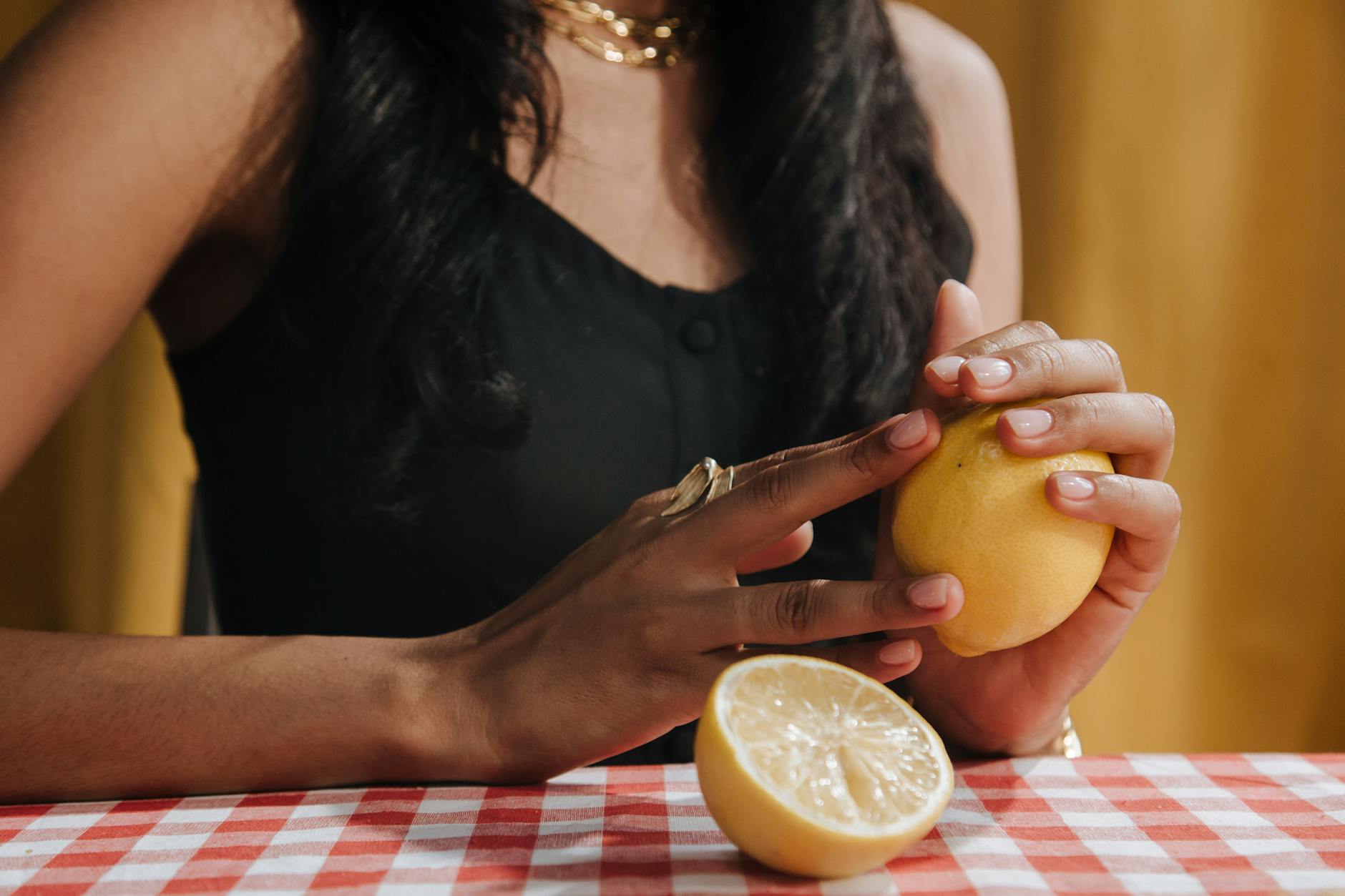
Let's start with what sensory overload actually does to your body
Here's the thing about sensory overload. It's not just "feeling stressed." It's your nervous system essentially slamming the door shut on new input. Your brain is already processing too much (work emails, family obligations, the news, physical pain, emotional labor), so when anything else tries to come in, including touch, your body goes into defense mode. Touch feels invasive. Sensation feels too loud. Even a partner's hand on your back can make you want to jump out of your skin.
This is completely normal. Your nervous system is doing exactly what it's supposed to do. But it also means pleasure feels completely inaccessible right now. And that's where the disconnect happens. You might want to reconnect with yourself or your partner sexually, but the idea of sensation feels impossible.
The good news? Lemon clitoral vibrators work differently than other forms of touch. They can actually help your nervous system learn to receive pleasure again, on your terms, at your pace.
Why lemon vibrators are different when you're overstimulated
When you're in sensory overload, random human touch can feel unpredictable and threatening. Your body doesn't know when it's coming or how long it will last. That uncertainty keeps your nervous system in protection mode.
A lemon vibrator changes the equation in three ways.
First, you control it completely. You turn it on, you decide the intensity, you turn it off. There's no surprise, no negotiation, no need to manage someone else's rhythm or expectations. That predictability is what allows your nervous system to start to relax.
Second, the sensation pattern from a lemon clitoral vibrator is consistent and rhythmic. Unlike fingers or hands, which vary in pressure and speed, a vibrator delivers the same pattern over and over. Your nervous system actually loves this. Predictable, rhythmic input is calming. It's the opposite of threatening.
Third, air-suction lemon vibrators like those available through Hello Nancy's Lemon Shop apply pressure differently than direct touch. The suction creates a gentle, indirect stimulation that feels more like pressure than touch. For a lot of people in sensory overload, this feels significantly less invasive than fingertips or lips directly on skin.
How to start if everything feels too much right now
The key word here is gradual. If you're in sensory overload, jumping straight into using a lemon vibrator is not the move. You're rebuilding your capacity for pleasure, not rushing back to it.
Start by just holding the vibrator. Don't turn it on yet. Sit with it for a few minutes. Let your hand get used to the weight and temperature. This sounds overly cautious, but when your nervous system is in protection mode, even this tiny step matters.
The next day or a few hours later, depending on how you feel, turn it on at the lowest setting and hold it against your inner thigh or forearm. Somewhere neutral. Somewhere that's not the primary pleasure site. Just feel the sensation through a layer of clothing or directly on skin. No pressure to feel anything. Just observation.
After a day or two of this, if it feels okay, try it on the outside of your vulva. Still at the lowest setting. Still with zero expectation of arousal or response. Your job right now is just to help your nervous system recognize that this sensation is safe.
This entire phase might take a week or more. That's not slow. That's smart.
The role of intensity settings in nervous system recovery
Most lemon vibrators have multiple intensity levels. If you're coming out of sensory overload, these settings are non-negotiable.
Start at 1. Actually, if there's a setting below 1, start there. The goal is not to feel pleasure yet. The goal is to prove to your nervous system that sensation can exist without it being a threat. A very gentle, almost barely-there vibration accomplishes this better than anything stronger.
Linger at each intensity level for several sessions. Move up only when you genuinely feel curious, not when you think you "should."
Many people who are rebuilding sensation after overload find that they stay at intensity levels 2-4 for weeks or even months. This is not a failure. This is exactly right. Your nervous system is healing. It's learning to trust sensation again.
The importance of choosing your own timing
One of the things that makes a lemon vibrator powerful during recovery from sensory overload is that you're in complete control of timing.
You don't have to be "in the mood." You don't have to wait for your partner to be available. You don't have to manage anyone else's disappointment or timeline. You can use a lemon clitoral vibrator for five minutes at 10 p.m. on a Tuesday and then stop because you're done. No negotiation.
This autonomy is medicine for a nervous system that's been in overdrive. Every time you choose when pleasure happens, your body learns that pleasure is something you control, not something that happens to you.
If you're rebuilding sensation with a partner, this is also where you might eventually invite them to watch or be present, but never to touch. Their presence without touch can be a middle ground. But that only happens when you're ready, which might be months away. That's fine.
Lubrication matters more when you're sensitive
When you're in sensory overload, your body typically isn't producing natural lubrication. Stress and nervous system dysregulation shut down those autonomic responses.
Use a water-based lubricant even if you think you don't need it. Even one tiny layer changes how the lemon vibrator feels against your skin. It reduces any friction that might feel scratchy or uncomfortable. It makes the sensation feel smoother and more integrated into your body rather than like something foreign pressing on you.
Lubrication also helps psychologically. It signals to your nervous system that you're preparing carefully, that you're taking care of yourself. That matters.
When to add a partner back into the picture
If you're doing this work while partnered, there's often a question hanging in the air about when to bring your partner into your rebuilding process.
The short answer is never until you feel genuinely ready. And "ready" doesn't mean aroused. It means you've spent time alone with a lemon vibrator, your nervous system has started to settle, and you're curious about what pleasure could feel like with someone else present.
When you do bring a partner in, the first phase is not about penetration or partnered sex. It's about them being in the room while you use a lemon vibrator on yourself. They're watching, maybe touching themselves, but not touching you. Your nervous system needs to learn that pleasure can happen near a partner without that triggering protection mode.
From there, you might eventually invite them to touch you in non-sexual ways while you use a lemon vibrator on yourself. Then eventually partnered touch becomes part of the experience. But each of these steps is separate from the ones before it. You're not on a timeline. You're rebuilding trust with your own body and with pleasure itself.
The role of environment when you're rebuilding sensation
Sensory overload usually happens in an overstimulating environment. Work is too much, home is too much, noise is too much, demands are too much.
When you're using a lemon vibrator to rebuild sensation, your environment matters enormously. You need to intentionally create the opposite: a space with minimal input.
Low lighting. No phone. No TV in the background. No other people. Maybe a soft blanket. Maybe silence, or maybe one very calm soundtrack that you choose ahead of time. The goal is to create an environment where the only sensation is what you're choosing to introduce via the lemon vibrator.
This isn't luxe self-care performance. This is basic nervous system ecology. When you remove competing sensory input, your brain can actually process what the vibrator is doing without it feeling like additional chaos.
You're not being selfish or difficult by needing this. You're being strategic.
Rebuilding pleasure takes time, and that's the point
Here's what I tell clients who are rebuilding sensation after overload: your nervous system took weeks or months to get this dysregulated. It's going to take weeks or months to settle. Maybe longer. That's not a bug in the process. That's a feature.
Every time you use a lemon vibrator slowly, predictably, and at your own pace, you're literally retraining your nervous system. You're telling it that sensation can be safe. You're proving that your body can receive pleasure without it being a threat.
That's not fast work. But it's profound work. And it matters.
People also ask
Can sensory overload make you lose interest in sex permanently?
No. Sensory overload suppresses your capacity to feel and receive pleasure, but it doesn't change your underlying sexuality or desire. Once your nervous system settles (which it will, with time and the right support), your interest in sex typically returns. You're not broken. You're temporarily overwhelmed. There's a difference.
How do I know when I'm ready to move up to a higher intensity on my lemon vibrator?
The honest answer is curiosity. Not pressure, not "should," but genuine curiosity. If you're at intensity 2 and you start wondering what intensity 3 feels like, that's your signal. If you feel relieved to turn it off at intensity 2 after each session, stay there longer. Your body will tell you when it's ready. Trust that.
What if I still feel overwhelmed even with a lemon vibrator on the lowest setting?
That's information, not failure. It means your nervous system needs more time in the foundation phase before any stimulation. Some people benefit from working with a somatic therapist or trauma-informed coach who can help them work with their nervous system separately from pleasure-related activities. Pleasure work can happen once your baseline nervous system activation is lower.
Can I use a lemon clitoral vibrator if I'm also managing anxiety or depression?
Absolutely. In fact, many people find that gentle, self-directed pleasure using a lemon vibrator is actually grounding and helpful alongside mental health treatment. That said, if you're on antidepressants that dull sensation, or if anxiety medications make you feel numb, talk to your doctor about timing. Sometimes adjusting when you take medication relative to pleasure time can help. Sometimes not. Worth asking.
Is it normal for pleasure to feel different or less intense when you're rebuilding after overload?
Completely normal. When your nervous system is resettling, sensation might feel muted. That's not permanent. It's just your body being protective while it heals. Over time, as your nervous system regulates, sensation will come back online. You might even find that your capacity for pleasure is richer than before because you've had to rebuild it consciously.
Should I tell my partner what I'm doing if I'm using a lemon vibrator to rebuild sensation?
That depends on your relationship and what feels safe to you. If you're partnered and this is relevant to your sex life together, transparency eventually helps. But you don't owe anyone access to or commentary on your process of rebuilding. You can share what you're comfortable sharing when you're ready. Some people never need to say anything. Some find it helpful to say, "I'm working on rebuilding my capacity for sensation. I'm using some tools on my own time. I'll let you know when I want to explore together." Whatever you choose is right.