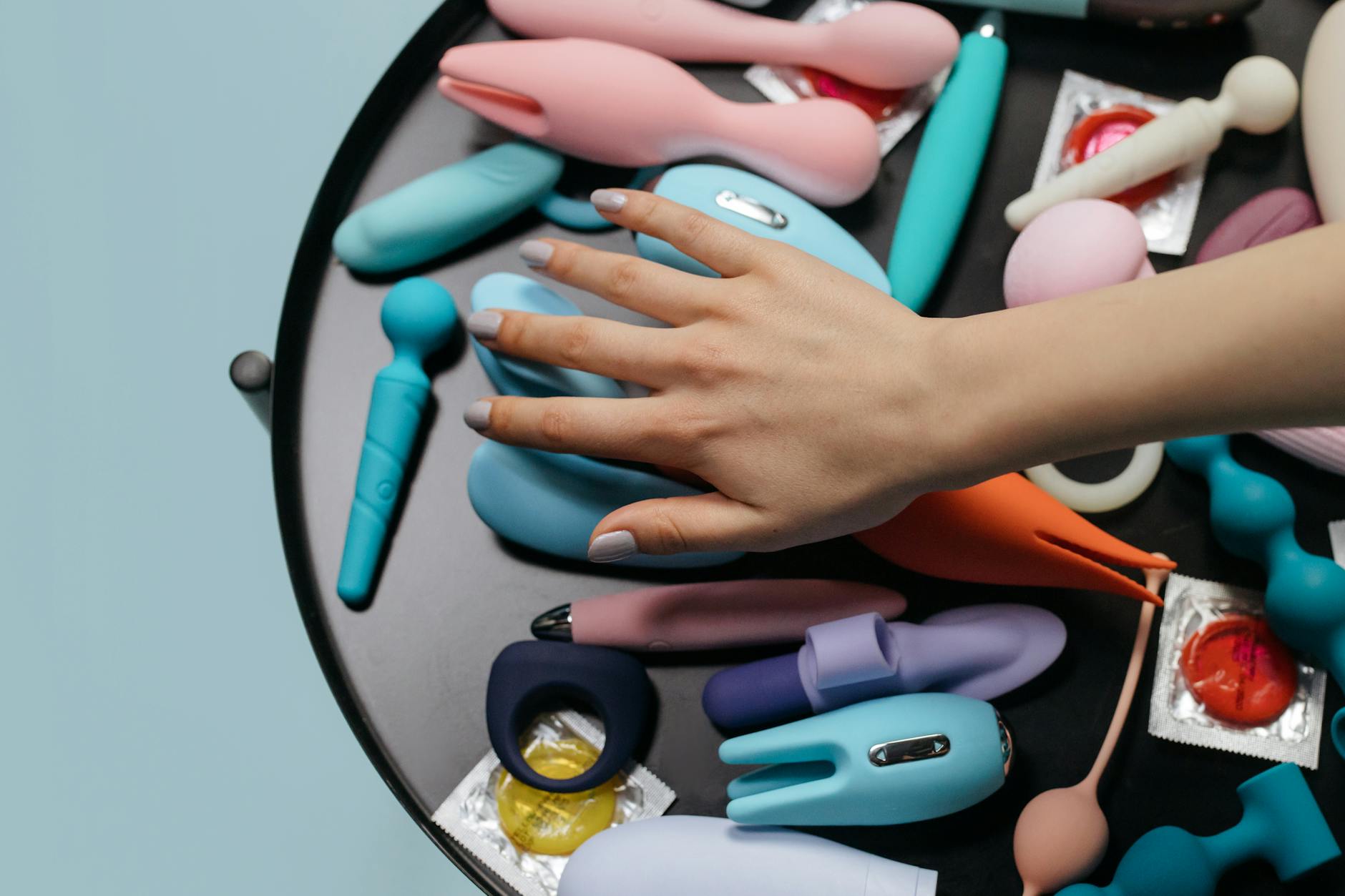
How to Use Lemon Vibrators When You Feel Touch Averse After a Health Scare
Let's be real: a health scare changes how your body feels to you. After a cancer diagnosis, a cardiac event, an infection, or even a bad medication reaction, touch becomes dangerous in your nervous system's calculation. Not because it is dangerous. Because your brain decided it needed to protect you, and now even a partner's hand on your shoulder can trigger a flinch.
Touch aversion after health trauma is not uncommon. It's also not permanent. But it requires patience, and it requires the right tools.
Why health scares create touch aversion
Your nervous system spent weeks or months in threat mode. Doctors touched you. Needles touched you. Your body did things you didn't control. The message your nervous system received was simple: touch equals danger. Now it's trying to keep you safe by rejecting all touch, even the kind that used to feel good.
This is a protective mechanism, not a personal failing. Your body is doing its job too well.
The tricky part: you can't logic your way out of this. You can't tell your nervous system "actually, my partner's hands are safe now." What you can do is slowly, deliberately teach your nervous system that pleasure touch is different from medical touch. That's where sensation tools come in.
Clitoral vibrators like the ones from Hello Nancy's Lemon Shop work particularly well here because they're not hands. They're not a person. They're a controlled, predictable stimulus that you control entirely. That distinction matters enormously when you're rebuilding trust in sensation.
The neuroscience of rebuilding sensation
After health trauma, your body goes into what therapists call a "window of tolerance." In that window, you can process sensation normally. Outside it, you either freeze (hyperarousal) or dissociate (hypoarousal). When you're touch averse, most touch lands outside that window.
The goal isn't to dive back into pleasure. It's to gradually, deliberately expand that window until pleasure touches land inside it again.
Lemon vibrators help because they offer something hands don't: consistency. A suction pattern on the Lem stays exactly the same. It doesn't shift pressure unexpectedly. It won't touch your thigh or your hip. You control the intensity. You can stop instantly. This predictability is what allows your nervous system to relax enough to register pleasure again.
How to start if touch feels terrifying
First: you don't start with a vibrator on your body. You start with awareness.
Spend a few days just looking at your lemon vibrator. Hold it while it's off. Notice the weight, the texture. Get bored with it. Your nervous system needs to learn that this object is not a threat. This takes longer after health trauma, and that's okay.
When you're ready (and this might be two days or two weeks), turn it on near you, but not on you. Hold it in your hand. Notice the vibration without the intensity that comes from genital contact. Some people find this step helps enormously. Your system learns the sensation without the vulnerability.
Only when that feels genuinely neutral should you think about any kind of skin contact. And that first contact might be on your arm, your neck, your inner wrist. Somewhere that feels less vulnerable than your genitals.
This is not excessive caution. This is respect for what your nervous system has been through. Move slowly.
Using pattern and rhythm to signal safety
One reason clitoral suction vibrators work so well for touch aversion is that the pattern itself becomes a signal of safety. You're not waiting for surprise. You know what's coming.
Start with the lowest intensity patterns. For a Hello Nancy Lemon vibrator, that might be pattern 1 or 2. Use the same pattern in the same location for several sessions before changing anything. You're teaching your nervous system: "This exact sensation happens here, at this intensity, for exactly as long as you want it."
That predictability rewires the threat response. Your amygdala learns: no surprise, no escalation, full control.
Many people find that a regular schedule helps too. If you use your lemon vibrator every evening for 10 minutes, your body starts to anticipate it as a contained, safe window. It's not spontaneous touch from a partner. It's you, alone, in control.
When to involve a partner (if you want to)
If you have a partner, this is a conversation, not a surprise. Tell them what you're working on. Tell them you need them to understand that your touch aversion isn't rejection of them. It's your nervous system's protective response to a specific trauma.
Most partners genuinely want to help, but they don't know how. Give them a role that doesn't include touching. They might sit in the room while you use your lemon vibrator. They might be nearby but not present. They might just know it's happening.
The person with the aversion remains in control of all contact. No partner touching, no surprise hand-holding. If and when you want to involve them, that happens slowly, and it starts with them watching, not participating.
Many couples find that after the person with aversion rebuilds sensation through solo use of clitoral vibrators, partnered touch becomes possible again. But that's not the goal yet. The goal right now is sensation and safety.
Managing the emotional load
Using pleasure tools after health trauma often brings up unexpected feelings. Relief, yes. But also grief. Anger that your body feels foreign. Sadness that something that used to feel good now requires all this scaffolding.
That's normal. Sit with it. Tell your partner about it. Consider talking to a trauma-informed therapist, ideally someone who specializes in medical trauma or sexual health.
There's also something called "sensation guilt." You might feel weird about using a vibrator when you "should" be rebuilding partnered intimacy instead. You're not. You're rebuilding your nervous system. That's the foundation. Everything else comes later.
One thing that helps: journal after. What did you notice? How did your body respond? Did it feel different from yesterday? You're not looking for orgasm or even arousal. You're looking for the smallest signs that your body is learning pleasure again. A subtle tingle. Reduced anxiety. Lasting 5 minutes longer before the aversion kicks in.
Those tiny shifts matter more than any big experience.
Timeline expectations
I won't lie to you: this takes time. For some people, six to eight weeks of regular, consistent use rebuilds enough sensation to notice a difference. For others, it's three to four months. The severity of the health trauma and the person's baseline anxiety matter.
But here's what almost always happens: with consistent, patient use of a predictable clitoral vibrator, the window of tolerance expands. Touch that used to trigger panic becomes tolerable. Tolerable becomes pleasant. Pleasant becomes genuinely pleasurable.
Your nervous system is trainable. It's just slower after trauma, and it requires respect.
When to seek professional support
If after two months of patient, regular use, you're still experiencing significant touch aversion or panic, talk to a therapist. Consider someone trained in somatic therapy or EMDR, which are both effective for trauma-based aversion.
You might also check in with your doctor about whether any lingering physical symptoms are amplifying the anxiety. Sometimes addressing the physical piece (pain, fatigue, lingering infection concerns) reduces the psychological aversion significantly.
There's no shame in this. Health trauma rewires you. Your job is to carefully, deliberately rewire yourself back.
Touch aversion after a health scare is your nervous system trying to protect you. The path back isn't about forcing yourself to feel okay with contact. It's about proving to your system, one predictable sensation at a time, that you're safe again. A lemon clitoral vibrator becomes evidence. Here's something that feels good. Here's something you control. Here's sensation without threat.
That's how you rebuild.
People Also Ask
Why does touch feel dangerous after a health scare if I'm physically healed?
Your body healed, but your nervous system is still in threat mode. Medical procedures, prolonged illness, or health anxiety can trigger a nervous system response that lingers long after the physical danger passes. Your amygdala learned that touch equals threat, and it takes deliberate, repeated evidence to convince it otherwise. That's not weakness. That's how trauma works.
Can using a vibrator make touch aversion worse?
No, not if you move slowly and stay within your window of tolerance. In fact, introducing a non-human, controllable stimulus often helps your nervous system distinguish between medical touch and pleasure touch. The key is stopping if you feel panicked. If you're consistently triggered, slow down further and talk to a therapist.
How do I know if I'm progressing?
Progress after health trauma is subtle. You might notice you flinch less when your partner reaches for your hand. You might use your vibrator for longer without anxiety creeping in. You might experience pleasure for a few seconds when you previously felt numb. None of these are small. They're evidence that your nervous system is learning safety.
Should I tell my partner I'm using a vibrator to rebuild sensation?
If you have a partner, yes, eventually. You don't need to make it a dramatic conversation. Something like "I'm working on rebuilding sensation after the health stuff, and I'm using a vibrator to help my nervous system learn safety again. I wanted you to know." Most partners feel relieved that you're actively working on it rather than avoiding it.
What if I still can't handle any touch after several months?
Talk to a trauma-informed therapist. Sometimes touch aversion that doesn't improve with time and tools points to deeper trauma, a medical issue like hyperalgia, or anxiety that needs additional support. Somatic therapy, EMDR, and sometimes medication can all help. You're not broken. You just might need more specialized support.
Can I use a lemon vibrator if I still have medical sensitivity or pain?
Start extremely slowly, and check with your doctor first. If you're still in the healing window, external contact on the vulva might feel unsafe to your system. You might need to wait longer, or you might need to start with touch on less sensitive areas first. Your nervous system's timeline is yours to determine, not anyone else's.