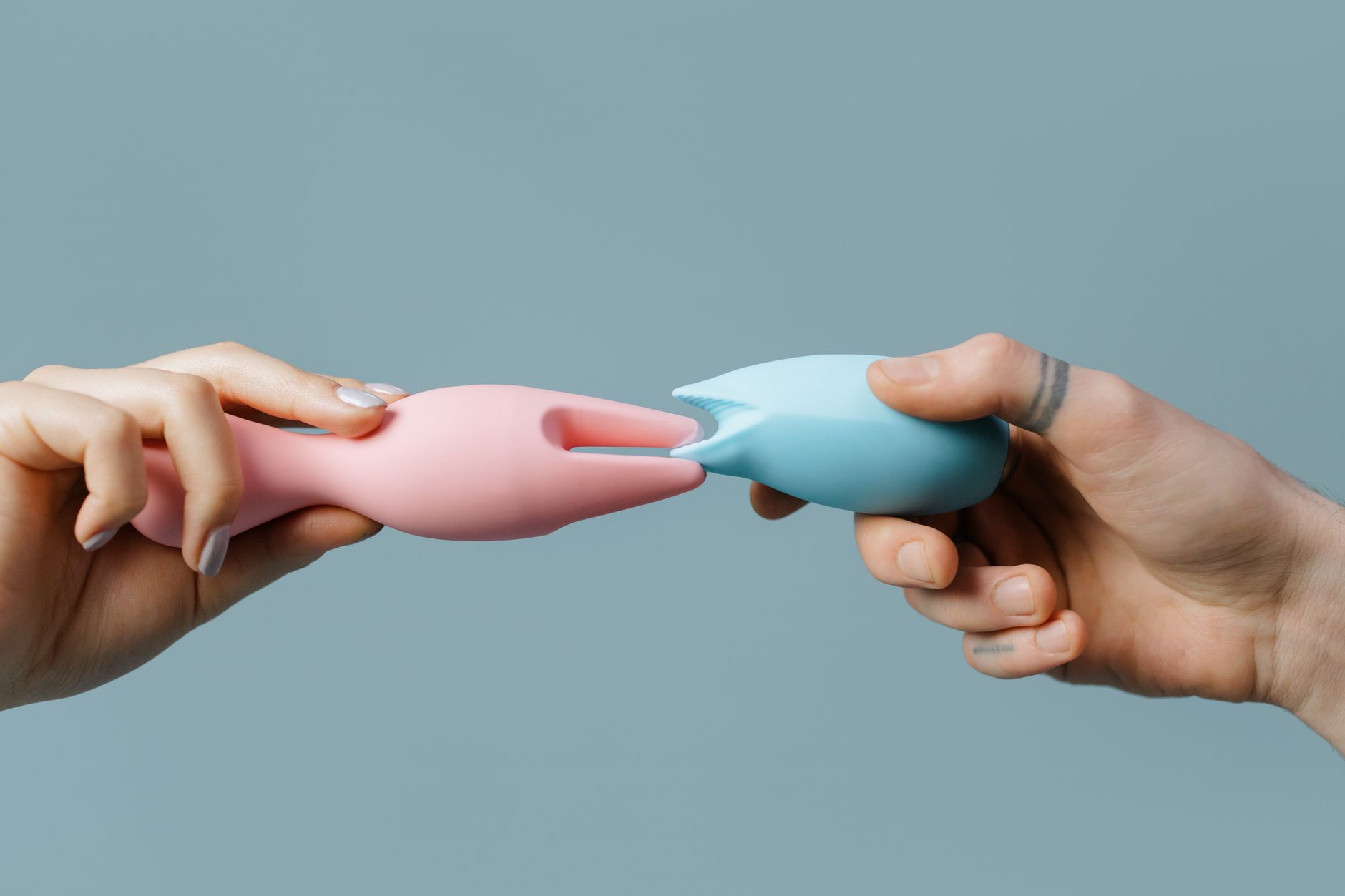
Let's be real about anorgasmia
You've tried. You've waited. You've done all the things you're supposed to do. And still nothing. Anorgasmia and delayed orgasm are wildly different problems wearing the same frustrating coat, and they need totally different solutions.
The good news: lemon vibrators work here. But not because they're magic. They work because they access pleasure pathways that get blocked by the exact thing that's stopping you from climaxing in the first place.
The actual difference between anorgasmia and delayed orgasm
Anorgasmia means orgasm never happens, period. Delayed orgasm means it happens eventually, but only after a very long time of stimulation. The distinction matters because the fix is different.
With delayed orgasm, your body is responding. Arousal is building. You're getting closer. The problem is that closer never becomes there. With anorgasmia, you hit a ceiling where nothing changes. You can be aroused, lubricated, stimulated directly, and still nothing gives.
Both feel broken. Neither is.
Why vibration works differently when orgasm won't come
Here's the thing that nobody tells you: manual stimulation and partnered sex rely on rhythm and consistency that humans struggle with. Our hands get tired. Our attention wanders. The pressure changes slightly. These tiny variations are often enough to interrupt the neural buildup that leads to orgasm.
A lemon vibrator provides something your hands and even your partner cannot: absolutely unwavering, repetitive stimulation at a frequency that's often just right for people with anorgasmia. The suction mechanism on a lemon clitoral vibrator is particularly powerful here because it stimulates without requiring you to manage anything.
Your job becomes just receiving, not performing or directing. That shift alone changes the brain's ability to relax into pleasure.
The role of anxiety in anorgasmia
Anorgasmia rarely lives alone. It usually comes with performance anxiety, past sexual trauma, relationship conflict, or a deep-rooted belief that you don't deserve this kind of feeling. The physiological response is identical: your nervous system stays partially braced, never fully relaxing into the stimulation.
When you use a lemon vibrator alone, you're removing the most common trigger for that bracing: the feeling of being watched or judged. You can start and stop without explanation. You can try the same sensation five times. You can take a break without anyone getting frustrated.
This permission to explore without audience is often the actual key, not the vibration itself.
Building sensation from zero: a step-by-step approach
If you've never had an orgasm (primary anorgasmia) or haven't had one in years (secondary anorgasmia), you need to rebuild the neural pathway slowly. Here's how.
Start with exploration, not orgasm. Spend time touching yourself with the lemon vibrator on the lowest setting, no goal in mind. The goal is sensation discovery, not climax. Try it for 10 minutes. Notice what feels different from your hands. Notice temperature, vibration pattern, where your attention naturally goes.
Watch for arousal micro-shifts. You're looking for tiny changes: breathing getting slightly deeper, clitoris engorging, wetness increasing. These are your body's way of saying yes. Speed and pressure changes in response to these shifts.
Use a mental anchor. Some people with anorgasmia benefit from focusing on a specific fantasy or sensation while using the vibrator. Others need complete mental silence. Experiment both ways. If fantasy helps, that's not a sign you're broken. It's a sign your brain needs permission to engage.
Extend time gradually. If you've never reached orgasm, spend 2 weeks using the vibrator for 15 minutes without any orgasm goal. Let your body acclimate to the sensation. In week 3, extend to 20 minutes. The longer your nervous system experiences safety, the more likely it is to let go.
When delayed orgasm is the wall
If you can orgasm but it takes 45 minutes of direct stimulation or more, the problem is usually one of three things: desensitization, insufficient pressure, or attentional fatigue.
A lemon vibrator with suction mode bypasses desensitization because it stimulates differently than your hands or a partnered touch. The mechanism is novel enough to wake up nerve endings that have adapted to repetitive input.
If pressure is the issue, the Lem's suction is genuinely intense. Many people with delayed orgasm report that switching from manual stimulation to suction cuts their time to orgasm from 45 minutes to 12. That's not placebo. That's the physics of nerve activation.
If your brain is the bottleneck (you can feel you're close but can't cross over), use the vibrator while watching something that activates your arousal system. Reading erotica on your phone, watching a scene from a film, or revisiting a fantasy helps redirect your attention away from the trying and back toward feeling.
The medication conversation
If you're on SSRIs, antipsychotics, or certain blood pressure medications, anorgasmia or delayed orgasm is often a direct side effect, not a personal failing. A lemon clitoral vibrator can sometimes compensate by providing intense enough stimulation that your brain can cross the finish line despite the medication's dampening effect.
But compensation isn't cure. If medication is the culprit, talk to your prescriber about adjusting timing (taking your SSRI after sex instead of before), switching medications, or adding an augmentation medication. A vibrator is a tool, not a replacement for medical adjustment.
The partner conversation
If you're exploring with a partner, the temptation is to position the lemon vibrator as a band-aid for a broken sexual connection. But often it's actually the opportunity to reset how you two approach intimacy entirely.
Using a vibrator together should mean: he or she holds it while you direct. You tell them when to speed up, slow down, shift angle. This turns arousal into collaboration instead of performance. The vibrator becomes a conversation tool, not a replacement for them.
Many couples report that integrating a lemon vibrator into partnered sex actually deepens their connection because it removes the pressure for one person to be the source of all pleasure.
When to seek professional help
If you've been using a vibrator consistently for 6 weeks with no progress, or if anorgasmia arrived suddenly (you used to have orgasms, now you don't), see a sex-positive therapist or a gynecologist trained in sexual medicine. Sudden onset sometimes signals a medical issue: low testosterone, hormonal imbalance, or a medication side effect.
If anorgasmia comes with emotional numbness, depression, relationship distress, or trauma symptoms, a vibrator alone won't fix it. Therapy needs to happen alongside exploration. The goal isn't to push yourself to climax. The goal is to rebuild your relationship with your own body.
The patience part
Rebuilding sensation takes time. Your nervous system didn't disconnect overnight, and it won't reconnect overnight either. Some people reach orgasm in three sessions. Others take three months. Neither path means anything about your worth or your body's capacity.
What matters is consistent, judgment-free exploration. A lemon vibrator is just the tool that makes that exploration safer and more accessible. The real work is showing up for yourself, again and again, without the weight of expectation.
Frequently asked questions
Can a lemon vibrator actually help with anorgasmia?
Yes, but it's not magic. Lemon vibrators work for anorgasmia because they provide intense, consistent stimulation that your hands can't replicate and that often bypasses the performance anxiety that blocks orgasm. The suction mechanism is particularly helpful because it doesn't require you to direct anything. However, if anorgasmia is tied to trauma, relationship issues, or medication, the vibrator alone won't solve it. It's a tool, not a cure.
How long should I use a lemon vibrator before expecting results?
If you're new to vibrators or rebuilding sensation, give yourself at least 2 to 3 weeks of consistent use before assessing progress. Consistency matters more than intensity. Using a vibrator for 15 minutes three times a week is better than one intense session a week. Your nervous system needs repeated signals of safety and pleasure before it relaxes enough to let orgasm happen.
What if a lemon vibrator makes me numb instead of helping?
Numbing usually means you're using it too intensely or for too long in one session. Start at the lowest vibration level and limit sessions to 15 minutes. If numbing persists, take a 3 to 5 day break and try again. You might also be experiencing desensitization from too much direct clitoral pressure. Try stimulating around the clitoris instead of directly on it, or use the vibrator through clothing.
Is delayed orgasm different enough to need a different approach than anorgasmia?
Yes. With delayed orgasm, your body is responsive. The problem is usually insufficient pressure, mental distraction, or desensitization from repetitive input. A lemon vibrator with strong suction can often cut your time to orgasm dramatically because it provides novel, intense stimulation. With anorgasmia, the issue is usually anxiety or a deeper physiological block, so the approach focuses more on building safety and exploring sensation without orgasm as a goal.
Should I use a lemon vibrator alone or with my partner?
Start alone. When you're working through anorgasmia or delayed orgasm, the absence of an audience lets your nervous system fully relax. Once you've rebuilt sensation and can reach orgasm solo, integrating a vibrator into partnered sex is wonderful. But the early work should be pressure-free and private.
What if I'm on medication that causes anorgasmia? Will a vibrator help?
A lemon vibrator might compensate by providing intense enough stimulation that you can cross the finish line despite the medication's dampening effect. But it's not addressing the root cause. Talk to your prescriber about adjusting timing, switching medications, or adding an augmentation medication. Vibrators and medical solutions work best together, not as a replacement.
Moving forward
Anorgasmia and delayed orgasm feel like proof that something is fundamentally wrong with your body. They're not. They're usually your nervous system telling you it doesn't feel safe enough to let go. A lemon vibrator can help build that safety by removing performance pressure and providing unwavering stimulation. But the real work is showing up for yourself, over and over, with patience and zero judgment. If you're stuck, reach out to a sex-positive therapist or your doctor. Contact us if you have questions about how lemon vibrators work or which option might suit your needs.