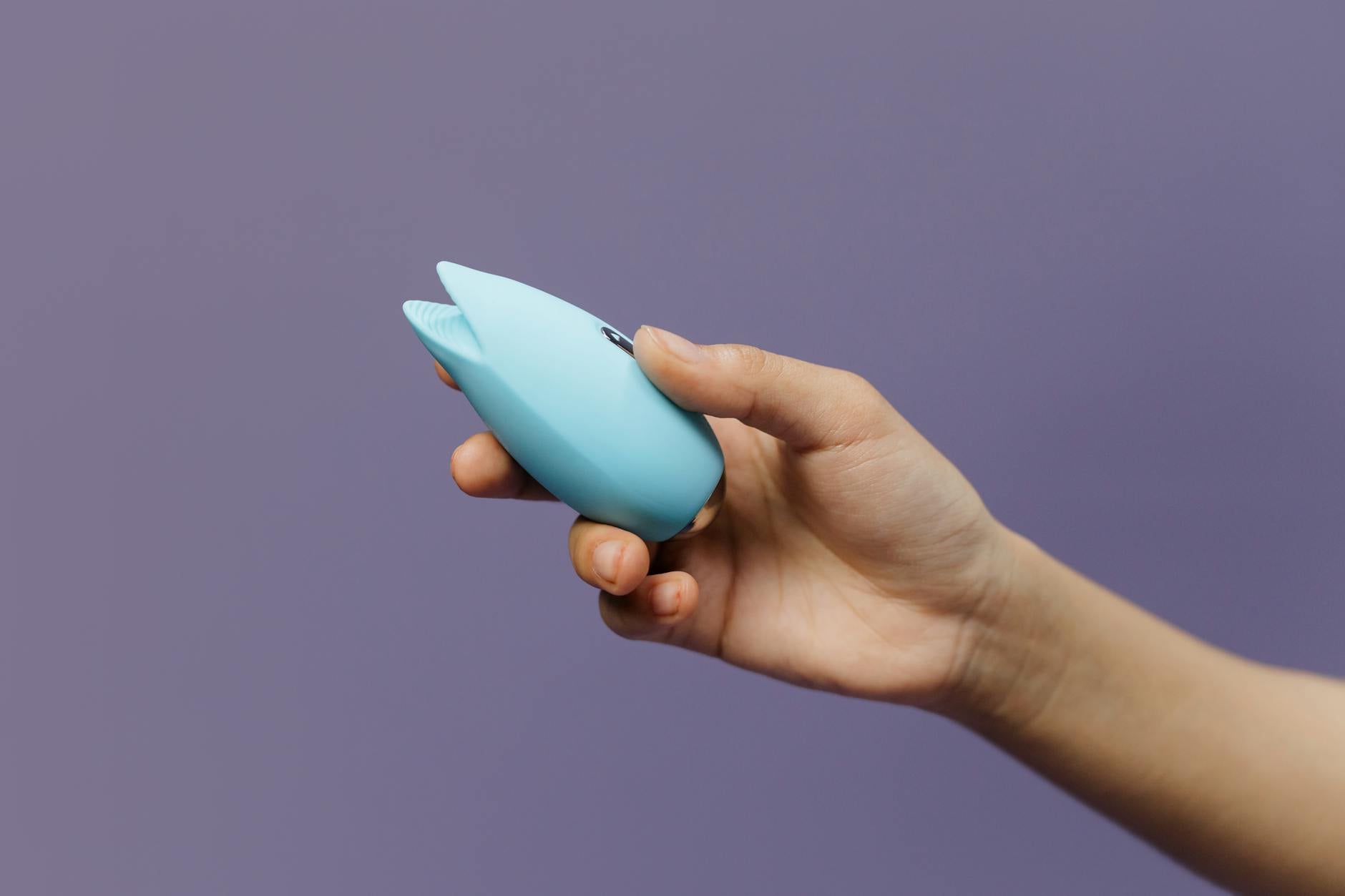
Let's be real about breakup sex trauma
After a breakup, your body doesn't immediately return to baseline. The nervous system stays vigilant. Touch that once felt safe now feels loaded with memory. Pleasure, which was often tangled up with that person, suddenly feels like territory you're not sure you're allowed to explore alone. This isn't weakness. This is biology and psychology colliding, and it's completely normal.
What I see most often in my practice is that people skip straight from "I'm not ready" to forcing themselves to reconnect with solo pleasure too quickly. The middle ground, the gradual reintroduction phase, gets lost. That's where lemon vibrators come in. They're not about jumping into intense sensation. They're about relearning that your pleasure belongs to you, separate from anyone else's hands or presence.
Why your nervous system is guarded right now
When you've been intimate with someone, pleasure gets neurologically tagged as a shared experience. The brain associates arousal with that person's touch, their presence, sometimes their specific patterns or preferences. After a breakup, your body is essentially asking, "Is this safe? Am I doing this wrong? Will this trigger memories I'm not ready for?" These are smart, protective questions.
Additionally, many people experience shame or guilt about solo pleasure after a relationship ends. There's a gap between knowing you deserve pleasure and actually feeling like it's okay to give it to yourself. That gap is where hesitation lives.
Using a lemon clitoral vibrator during this phase serves a specific purpose. It's external, it's not you, and it doesn't carry the weight of partner expectations or muscle memory. It's a neutral third party in your own pleasure.
Start with zero pressure, maximum context
The first step isn't using the toy. It's building permission around using it. Here's what I recommend to clients rebuilding pleasure confidence:
Set a date, not a deadline. Pick an evening when you're already feeling good, not when you're trying to fix sadness or loneliness. Pleasure after heartbreak works best when it's not doing emotional labor.
Create a container. Light a candle. Put your phone away. Take a warm bath first. The goal is to signal to your nervous system that this is a ritual, not a rushed moment or a test you might fail.
Tell yourself what's actually happening. "I'm spending time with my body. I'm allowed to feel good. This has nothing to do with my ex." Say it out loud. Sounds silly, but nervous systems respond to explicit permission.
Start with touch before the toy. Spend 10-15 minutes just exploring your own body. No outcome pressure. This is the foundation.
Once you're genuinely relaxed, introduce the lemon vibrator at the lowest setting. The goal here is familiarity, not orgasm. You're teaching your nervous system, "This feels nice. This is safe."
The specific benefit of suction-based sensation
Unlike traditional vibrators, lemon clitoral vibrators use air-pulse technology. The sensation is completely different from what a partner's hand feels like. This is intentional and helpful.
For someone rebuilding pleasure confidence, suction-based stimulation offers a few advantages. First, it's not a replication of anything else. Your body can't make a memory comparison or feel like it's "wrong" in a familiar way. Second, the sensation is gentler on the actual clitoral tissue if you're guarded or tense. Third, because it feels novel, it actually breaks the negative thought loop.
Start on pattern 1 or 2. You can move up, but there's no rule saying you have to. Pleasure doesn't need to be intense to be real or valuable. Some of my clients find that gentler patterns feel more grounding during healing phases because they're less likely to trigger an anxious response.
What happens if you feel guilty or weird
You'll probably feel something uncomfortable on your first attempt. That's fine. It might be guilt, it might be "This feels wrong," it might be your ex's voice in your head. Don't fight it or treat it as failure.
What I teach clients is the pause technique. Feel the discomfort, pause the toy, take three deep breaths, and then decide what you actually want to do. Sometimes you'll decide to stop. That's a valid choice. Sometimes you'll decide to keep going. Also valid. The key is that you're making the choice, not your fear.
Over time, these pauses get rarer. Your nervous system learns that pleasure is information, not danger.
How this bridges back to partnered sex (if you want that)
One of the most misunderstood parts of breakup recovery is that solo pleasure and partnered pleasure are separate skills. They're not the same. Solo exploration isn't a dress rehearsal for the next relationship. It's a conversation with yourself.
But here's what does transfer: confidence. When you know your own body can feel good independent of anyone else, it changes everything. You're not looking for a partner to "fix" your pleasure. You're looking for a partner to share it with. That's a completely different negotiation.
Using a lemon vibrator now also teaches you specificity. You learn what patterns feel good, what speed matters, what kind of pressure you actually need. That knowledge is gold when you're eventually with someone else. You can say, "I like this" instead of guessing or performing.
The timeline people don't talk about
There's no universal timeline for pleasure recovery after a breakup. Some people need weeks. Some need months. Some find that solo exploration actually accelerates healing because it reestablishes autonomy in their body.
What matters is consistency and gentleness. If you can spend 10 minutes once a week with your lemon vibrator and without shame or pressure, that's exponentially better than a single intense session followed by months of avoidance.
I also recommend tracking patterns. Not obsessively, but notice: Do I feel better after? Does a particular time of day feel safer? Does a specific pattern or rhythm help me relax? This becomes part of your body literacy.
When to consider talking to someone
If you're experiencing pain during any kind of touch, or if you're having panic responses that don't ease with time and gentle practice, that's worth discussing with a therapist or doctor. Post-breakup nervous system activation is normal. Ongoing trauma responses might benefit from professional support.
Similarly, if guilt isn't shifting after consistent gentle practice, that might point to deeper beliefs about your own sexuality that a therapist trained in sexual health can help you examine. There's no shame in getting help with that.
Remembering that you deserve pleasure, and that solo pleasure is an act of self-respect, not selfishness, is the real work. A lemon vibrator is just the tool.
FAQ
How long should I wait after a breakup before using a vibrator?
There's no magic number. The question isn't "How long?" but "Am I using this to feel better, or am I using this to run away?" If you're reaching for it to numb pain, give yourself a few weeks. If you're reaching for it out of curiosity or because you want to rebuild your own pleasure, sooner is fine. Listen to your actual body, not a timeline someone else invented.
What if I feel like I'm betraying my ex by using a lemon clitoral vibrator?
Your pleasure was never theirs to own. This is one of the deeper reckonings after a breakup. You're not betraying anyone by exploring your own body. You're actually reclaiming autonomy. That feeling of betrayal usually means you internalized a belief that your body should be for someone else's benefit. It's worth untangling that belief, ideally with a therapist.
Can using a lemon vibrator help me feel sexy again after heartbreak?
Yes, but not the way you might think. The goal isn't to feel "sexy" for an imaginary person. It's to reconnect with physical sensation and capability. Sexiness is a byproduct of self-trust. When you know your body can feel good without permission, that shifts everything. That's real confidence.
What if the lemon vibrator triggers memories of my ex?
Then pause. You're not doing anything wrong. Your brain made associations, and those associations are firing. The recovery is the same as any trigger. Notice it, breathe, remind yourself where you are and who you're with (yourself), and decide if you want to continue. Most people find that after a few gentle exposures, the emotional charge around the toy decreases. But if it persists, a different tool or more time might be what you need.
Should I tell my next partner about practicing with a lemon vibrator after my breakup?
Not unless you want to. It's your body and your healing process. That said, if you eventually want to use lemon sexual toys with a partner, knowing how to introduce that conversation comes much easier when you've already spent time exploring alone. You know what you like, so you can ask for what feels good.
How do I know if I'm actually ready for partnered sex again?
You don't have to be perfectly healed. Healing happens in relationships too. But you should be able to touch your own body without shame or dread. You should be interested in pleasure for its own sake, not as proof that you're over someone. You should feel genuinely okay with the idea of your own pleasure, separate from anyone else's presence. If those three things are true, you're ready to figure the rest out with communication and patience.
Rebuilding pleasure is rebuilding trust with yourself
This is the part I always come back to in my clinical work. After heartbreak, we lose trust in our judgment, our bodies, our instincts. Using a lemon vibrator isn't about the vibrator. It's about practicing the sentence, "I want this, and it's okay." Over and over until your nervous system actually believes it.
Your pleasure matters independent of anyone else's involvement. That's not selfish. That's the foundation everything else builds from. Start there. The rest follows.