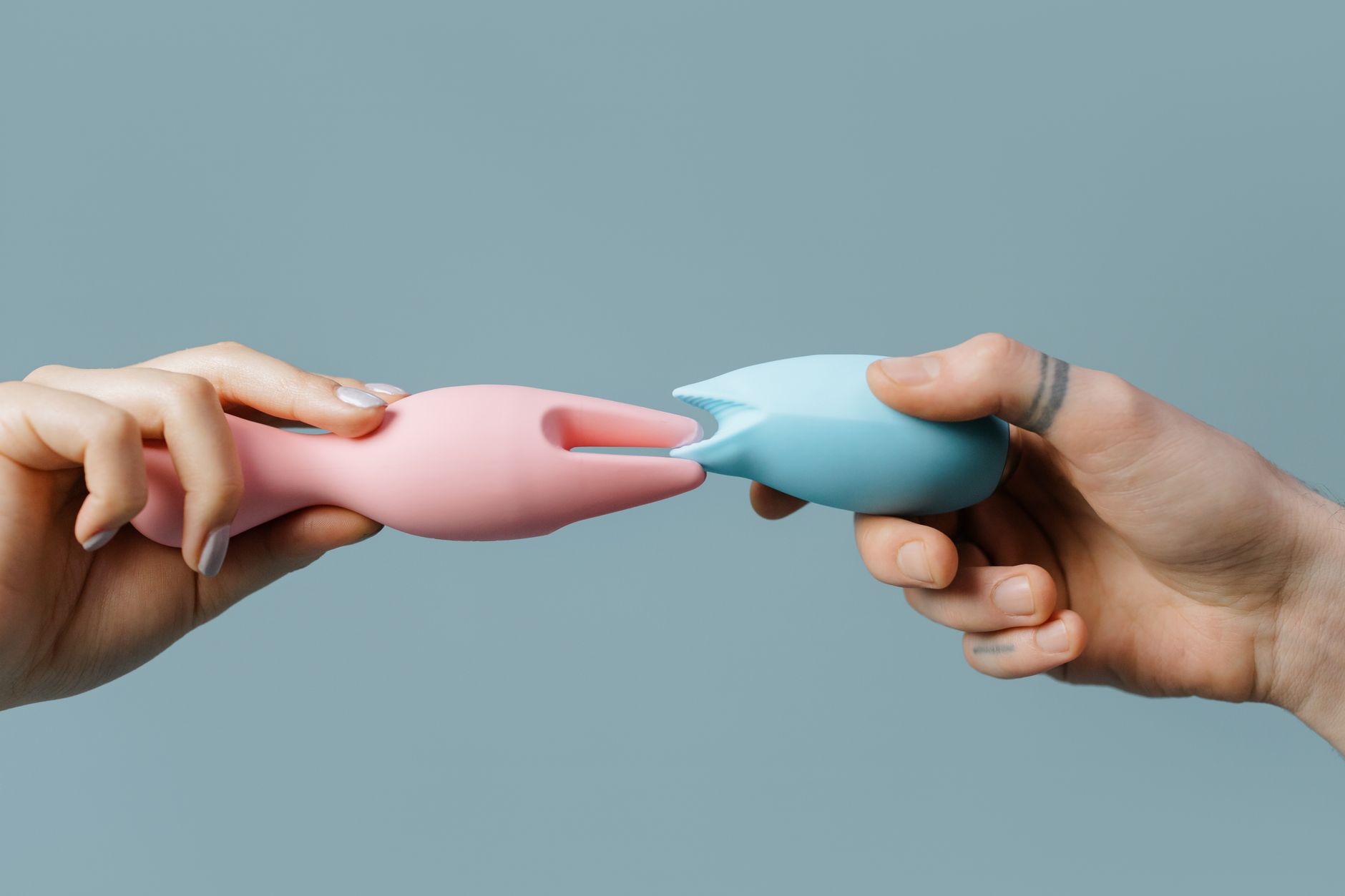
Let's start with the obvious part
Testosterone therapy changes everything about how your body responds to pleasure. It's not subtle. Within weeks, your clitoris typically enlarges, your arousal kicks in faster, and sensation that used to feel distant suddenly feels urgent. That's the point of the therapy. But when it comes to using lemon vibrators and other clitoral toys, most people aren't told what to actually expect. So they get frustrated, confused, or assume something is wrong.
Nothing is wrong. Your body is working differently now. And your pleasure practice needs to catch up.
What testosterone does to physical sensation
Testosterone increases clitoral growth. Over weeks and months of therapy, the clitoris becomes more pronounced, with expanded tissue that's more densely packed with nerve endings. This isn't permanent at the scale of a penis. It's a significant change, but it's localized. Here's what matters for you: more tissue means more surface area to stimulate, and it also means your existing sensitivity gets amplified.
That amplification is real. Clients on testosterone therapy often report that patterns on their lemon clitoral vibrator that used to feel nice now feel overwhelming. The same intensity that took ten minutes to build orgasm now does it in three. Some people find this incredible. Others find it jarring. Both are completely normal.
Arts and sensation aren't gendered, but testosterone is one of the major drivers of rapid arousal in anyone's body. You're not suddenly becoming "more like men." You're experiencing a documented physiological shift that happens to involve faster blood flow to the clitoris, quicker vasocongestion, and shorter windows from first touch to peak response.
Why your lemon vibrator suddenly feels too intense
There are three reasons this happens, and they overlap.
First, clitoral growth changes how contact feels. Imagine the difference between pressing a button on a flat surface versus one that's raised and prominent. Same pressure, completely different sensation. Your enlarged clitoris is more exposed, so direct contact from a vibrator pattern that used to feel medium now feels intense.
Second, your arousal baseline shifts. Before testosterone, you might have needed extended warm-up time and consistent stimulation to reach arousal. Now that baseline is lower. Lighter touch gets you going faster, which means heavier stimulation can feel aggressive by comparison.
Third, your refractory period shortens. If you could have one orgasm and need thirty minutes before another feels possible, testosterone therapy often cuts that window to five or ten minutes. That speed change affects how your body perceives intensity overall. You're not used to responding this quickly, so the sensation feels sharper.
Adjusting your lemon vibrator technique
Here's what I recommend to clients who are newly on testosterone therapy and finding their favorite tools suddenly uncomfortable.
Start by reducing intensity by one to two levels. If you were using pattern 5 or 6 on your lemon clitoral vibrator, drop to 3 or 4. Give yourself two to three weeks at the lower intensity before deciding it's wrong. Your nervous system needs time to recalibrate what "normal" feels like.
Try indirect stimulation first. Instead of applying your lemon vibrator directly to the clitoris, place it over underwear or a thin fabric barrier. This dulls the sensation enough that it stays pleasurable without overwhelming. As you adjust, you can gradually remove the barrier.
Extend your warm-up time intentionally. This sounds backward when your arousal is faster, but it works. Spend five to ten minutes with external touch, kissing, or gentle vibration at the lowest settings before moving to more direct stimulation. This gives your nervous system a chance to expect the intensity rather than be ambushed by it.
Explore different contact patterns. The pattern that was your favorite before might not suit you now. Broad, rolling vibrations sometimes feel better than quick pulses. Pulsing sometimes feels better than steady. Spend time experimenting with the different settings on your lemon vibrator without the goal of orgasm. Pleasure is the goal. Discovery is the goal.
What people don't tell you about testosterone and desire
Arousal speed increases, yes. But so does something less discussed: specificity of desire. Many clients report that before testosterone, pleasure felt diffuse and general. After starting therapy, they experience much sharper, more focused sexual response. Their preferences get more defined. What they want from a partner, from solo play, from sensation itself becomes clearer.
This is useful information. If you suddenly find yourself strongly preferring certain patterns or speeds or types of touch, that's not noise. That's your body telling you something real about what it actually wants. Listen to it.
Testosterone also affects mental arousal components. The cognitive piece of desire strengthens. You might find yourself thinking about pleasure more often, having fantasies that are more specific, or wanting to initiate more frequently. This isn't hormonal compulsion. It's a documented shift in baseline motivation. And it matters for how you approach pleasure, whether solo or partnered.
The emotional adjustment that matters more than the physical one
Here's what catches people off guard: the pleasure part is actually easier to adapt to than the identity part. Your clitoris got bigger, your arousal works faster, your lemon vibrator feels different. Those are mechanics. We fix mechanics.
What's harder is the internal recalibration of what your body means, what your sexuality means, what pleasure means in the context of a body that's changing. Some people find this liberating. Some find it disorienting. Most find it complicated.
If you have a partner, the adjustment is compounded. Their touch might feel different to you now. Your desire patterns might have shifted in ways that surprise both of you. The solution isn't to white-knuckle through it or assume the therapy was a mistake. It's to have honest conversations about what's shifting and to rebuild the tactile and emotional part of your connection alongside the physical changes.
Testosterone therapy doesn't ruin pleasure. It reorganizes it. Your job is to learn the new map.
When to check in with your prescriber
If the intensity problem persists after three to four weeks of reduced settings and adjusted technique, mention it to whoever prescribed your testosterone. Sometimes a dose adjustment helps. Sometimes you're discovering that a particular vibrator just isn't the right fit for your new body, and that's fine too.
If sensation becomes painful or feels raw rather than intense, that's different and worth mentioning. You shouldn't have to white-knuckle through pleasure. Pain signals are real signals.
If your arousal speed has become distressing or you feel out of control of your response, that's also worth discussing. Testosterone therapy is dosed to be manageable, but individual responses vary. Your prescriber has options if the adjustment isn't working.
The pleasure part doesn't end, it evolves
Testosterone therapy changes your body's pleasure response in ways that can feel shocking. The lemon clitoral vibrators and toys that used to feel perfect now need adjustment. Your preferences shift. Your speed shifts. Your focus shifts. None of that means you've lost your capacity for pleasure. You've just entered a different chapter of it.
The adjustment period is real. Give yourself grace through it. Experiment without judgment. Talk to your partner if you have one. And remember that this isn't a permanent problem to solve. It's a transition to move through. On the other side is a deeper understanding of what your body actually wants.
People also ask
How long does it take to feel normal after starting testosterone therapy?
Physical changes start within two to four weeks, with clitoral growth visible within six to eight weeks. But psychological adaptation takes longer. Most people report feeling genuinely adjusted to their body's new pleasure response by three to six months. That doesn't mean you're struggling the whole time. It means you're learning, experimenting, and gradually discovering what works. Give yourself at least that window before deciding something isn't right.
Can I use the same lemon vibrator I used before testosterone therapy?
Yes, but probably not at the same settings. Many people keep their favorite lemon clitoral vibrators and simply use lower patterns or add a fabric barrier for indirect stimulation. The vibrator isn't broken. Your body's sensitivity has changed. Starting with reduced intensity and building up from there usually works. After a few months of adjustment, some people return to their original settings. Others find they prefer lower intensity permanently.
Does testosterone therapy make orgasms feel better?
That varies by person and by what "better" means to you. Many people report that orgasms become more intense and arrive faster. Some report they feel more localized. Others notice they can have multiple orgasms in succession now, where they couldn't before. A smaller group finds the speed overwhelming at first. There's no universal experience here. Your particular response is your answer.
Should I tell my partner that sensation feels different for me?
Yes, honestly. Your body is changing, and your pleasure is changing alongside it. If you're partnered, they'll notice. The lemon vibrators and toys you use together might feel different to both of you. What felt good a few months ago might feel too intense now. Being explicit about what's shifting removes the guesswork and gives both of you permission to adapt together.
Is it normal to want less direct touch during sex after starting testosterone therapy?
Absolutely. Some people find that the increased sensitivity to direct stimulation means they need more time without direct contact during partnered sex. Others prefer more external sensation and less internal penetration. Preferences shift. What mattered before might matter less now. This isn't a sign anything is wrong. It's a sign your body is telling you what it actually wants at this new baseline.
Can I use testosterone therapy and lemon vibrators if I'm also on hormonal birth control?
That's a question for your prescriber, who knows both your testosterone dose and your contraceptive method. Some combinations interact minimally. Others require monitoring. Don't assume anything is automatically unsafe or automatically fine. Get specific medical guidance on your particular situation.
Resources and further reading
If you're navigating testosterone therapy and pleasure, having support matters. Whether that's medical guidance from a prescriber who understands sexual health, conversations with a partner, or simply honest experimentation with what your body now needs, you deserve clarity. Hello Nancy's Lemon Shop is here to support your pleasure journey at every stage, with products designed for different sensitivities and preferences. And if you have questions about how to use lemon vibrators safely and enjoyably as your body changes, reach out. We're here to help.